PEACE IN ISIOLO, KENYA
VENUE: KAMBI YA JUU and WABERA PRIMARY SCHOOLS, ISIOLO.
Sponsoring organizations:
International Relief Friendship Foundation (IRFF) – URAFIKI-Kenya.
Isiolo Interreligious Council (IIC).
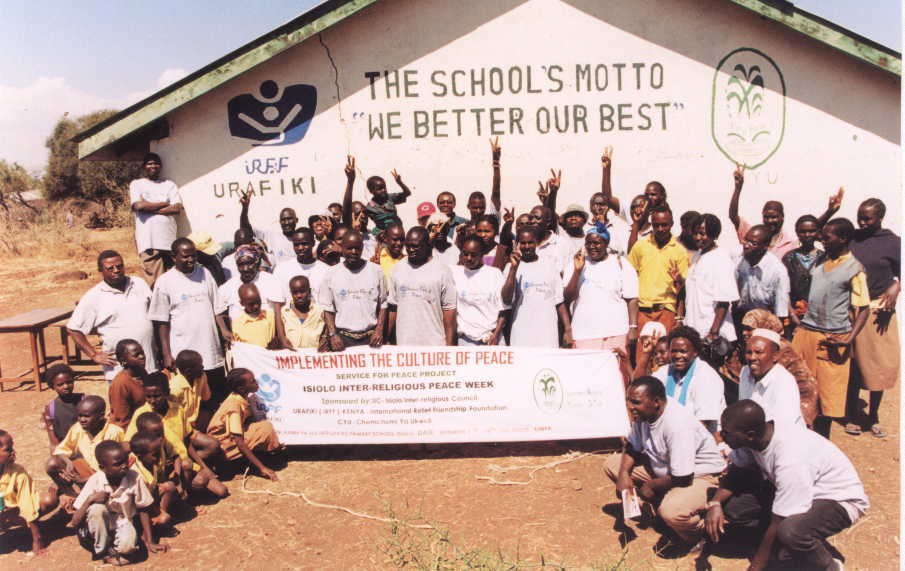
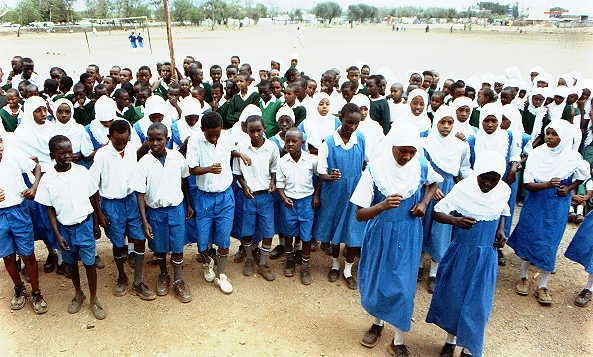
GROUP PHOTO OF THE PARTICIPANTS AND SCHOOL CHILDREN CELEBRATING THE SUCCESFUL COMPLETION OF THE PEACE WEEK EVENT AT KAMBI YA JUU PRIMARY SCHOOL, ISIOLO KENYA. SEPTEMBER , 2004.
Introduction
The Isiolo Inter-religious Peace Week Event (IIPWE) took place at Isiolo Town, Northern-central Kenya from 11th to 18th September 2004. Situated near Mt. Kenya, Isiolo (with a population of 140,000 people) is the gateway for travel to Sudan, Ethiopia and Somalia. Majority of the Isiolo residents make their livelihood from the shepherding of cattle, sheep and camels. Cattle rustling and tribal infighting over green pastures and water has been quite common in the past. Besides this, Isiolo has been an ideal place for trade – and an easy place to get a gun, fake ID and ammunition. Under such a setting, its evident why Isiolo has become a rallying focal point in the region where issues dealing with peace have taken a center stage.
The Peace Week Event, which has developed into an annual event, has been co-sponsored by the International Relief Friendship Foundation (IRFF), ChemChemi Ya Ukweli (CYU) Trust, and Isiolo Inter-religious Council (IIC). The IIPWE is an initiative of the IIC that has been promoting peace in Isiolo for the last three years.
Theme of the Project
This year’s Peace Week Event was celebrated under the theme “Implementing a Culture of Peace” and was a follow-up program to the last year’s (2003) theme “Nurturing a Culture of Peace” that entailed a three-days training program in Peace building, Inter-religious Dialogue, Conflict Management and Mediation, HIV-AIDS and Family Values; a Public Baraza procession and Speech day, Sports, and Community visits.
Objective of the Project
The main objective for this year’s (2004) event was a service for peace (SFP) project that was centered on a rehabilitation program for a rural school, namely, “Kambi ya Juu Primary School” located within Isiolo town, north-central Kenya. The rehabilitation project was preceded by a Peace building training workshop that brought together about 40 participants mainly from the local area who together were joined by other international participants from the neighboring countries -Tanzania and Zambia- and the USA. The topics of the training program were selected with the aim of improving the skills and information base of the local participants in the field of peace building. The participants attending the training workshop came from recognized educational leaders, community elders, youth leaders, university students, government and the civil society organizations.
The Official Opening of the Workshop
The Peace Week Event, which lasted for seven days, was officially opened by the local area Member of Parliament, Honorable Mohammed Kuti, MP, Isiolo North, at the Cultural Hall of the Anglican Church in Isiolo Town.
WORKSHOP VENUE: AL-FARAH ISLAMIC COMMUNITY CENTER, ISIOLO KENYA.
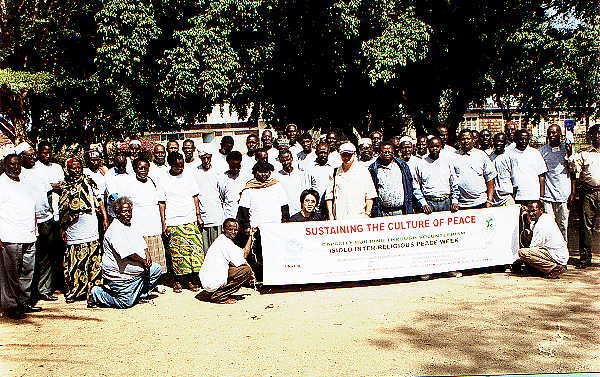
GROUP PHOTO: PARTICIPANTS ATTENDING THE 2005 ISIOLO INTERRELIGIOUS PEACE WEEK WORKSHOP EVENT. SEPTEMBER , 2005.
Introduction
The September 2005 Isiolo Inter-religious Peace Week Event (IPWE), which was centered on the theme “Sustaining the culture of Peace”, comprised of a three day Active Non-violence and peace building workshop, and schools rehabilitation activities for two rural primary schools in Isiolo district, namely: “Kambi Ya Juu” integrated primary school and Wabera primary school.
The official opening ceremony for the IPWE was held at the Al-Falah Muslim community hall. The area’s District Officer (D.O) gave the inaugural opening speech. In his speech, the D.O stressed the need to maintain peace as the only way to pave the areas economic stability and progress. The D.O applauded the peace week project event and called for a greater participation of the youth and the entire community as well.
The IRFF International field director – Dr. Massimo Trombin – took the participants through a drill of the inner self-realization by asking them about their feeling when they shouted in high pitch the words “war” and “peace”. Some participants expressed a feeling of “awkwardness” at the shout of the word “war” especially when they reflected on how it had affected the Isiolo community in the past. Dr. Massimo explained that the shout of the word “war” was always accompanied by a strong emotional outburst as compared with the shout of the word “peace” that brought an inner and quiet tranquility. The essence is that it can be easier to create war and that it requires our devotion and commitment to work towards peace.
During his visit to the project site at Isiolo, the International Field Director- Dr. Massimo – was able to address the students of Wabera primary School- one of the school that benefited from IRFF project donation. He encouraged the students to maintain high moral standards and devote their time wisely in education studies.
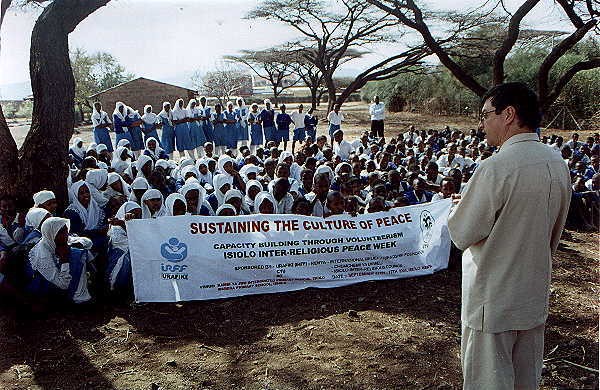
DR. MASSIMO ADDRESSING THE STUDENTS OF WABERA PRIMARY SCHOOL, ISIOLO, KENYA.
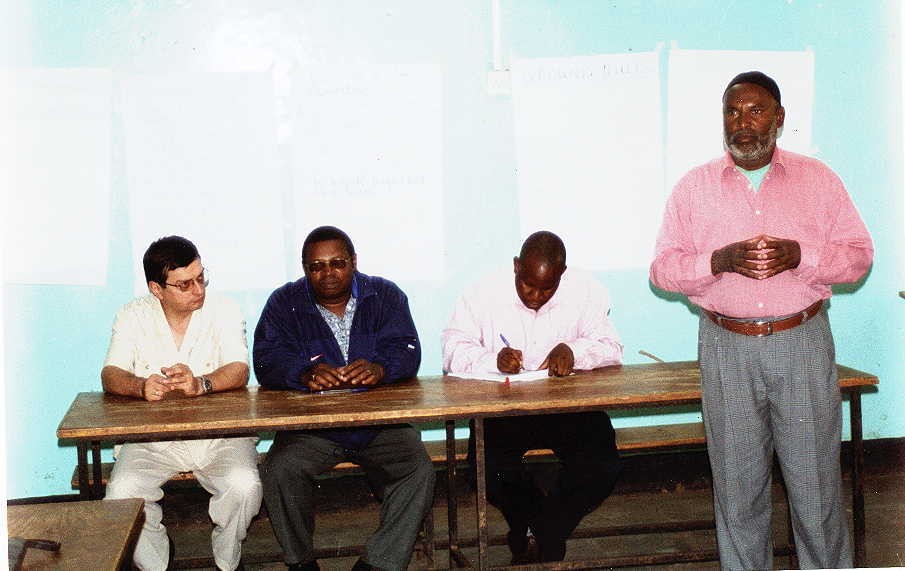
SHEIKH AHMED SEHT FROM THE AL-FALAH MUSLIM COMMUNITY CENTER GIVING A WELCOMING SPEECH. AT OPENING CEREMONY.
Proceedings of the workshop
1. Expectations of the workshop participants
The workshop participants were requested to list their expectations based on the theme of the peace week: “Sustaining the Culture of Peace”. The following were their responses:
- To learn more about peaceful security.
- How to be united and to talk about peace.
- To know more about peace and to be peaceful.
- How to be united and stay together
- To learn and know more about peace.
- The past history of the Isiolo peace week.
- The security of the country.
2. A Discussion on the topic of Violence. The workshop participants were divided into six groups to discuss issues related to violence. The listed questions for discussion and responses from the respective groups are presented here below:
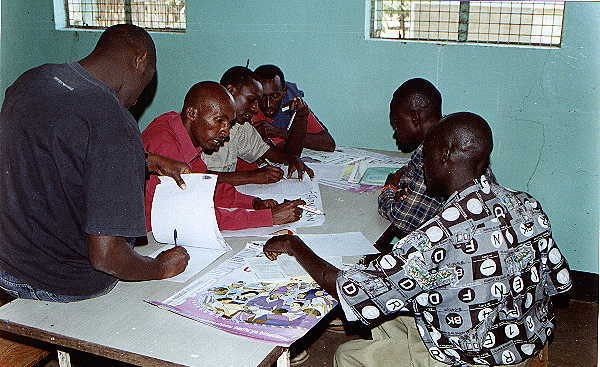
A WORKSHOP DISCUSSION SESSION: ISIOLO YOUTH PARTICIPANTS
Question
How have I been a source of violence or a perpetrator of violence?
Answer
- Supporting raids e.g. selling and buying firearms, funding raiders, inciting people, hire ring mercenaries.
- Spreading rumors.
- Not conveying information to the right authority.
- Envy among the communities.
- Tribalism, favoritism.
- Revenge.
- Indulgence in drugs.
- Ignorance.
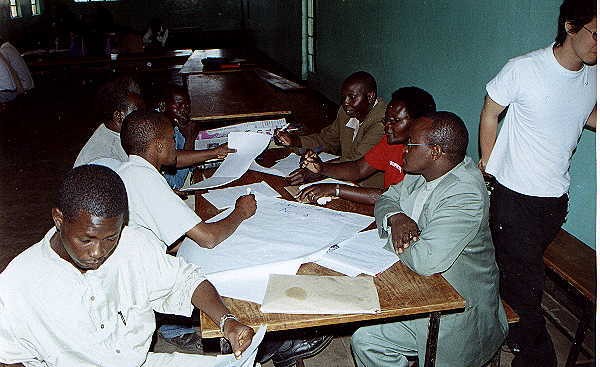
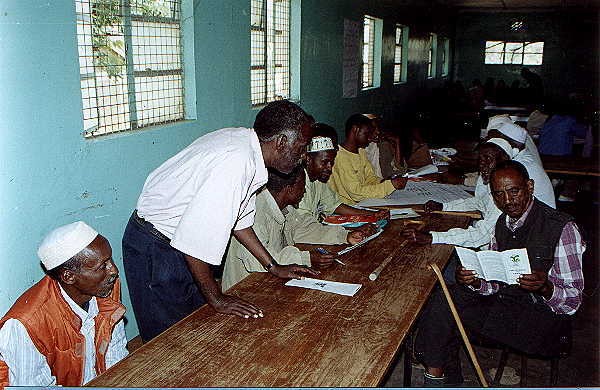
WORKSHOP PARTICIPANTS DURING A DISCUSSION SESSION.
Question
How have I been a victim of violence?
Answer
- Lost animals, family members and property.
- Downfall of education in the community.
- Displacement.
- Psychological / mental torture or disturbance.
- Living in fear
- Enimity among individuals and communities.
- Physical disabilities
- Hunger
- Closing down of schools and businesses.
Question
How did I respond to the two questions above?
Answer
- To shun outdated cultural practices like raiding.
- Forgiving and forgetting the past
- Prayers or seeking spiritual guidelines.
- Supporting the displaced families with basic needs.
- Being an agent of truce e.g. lobbying for peace.
- Introduction of security teams.
- Educating community leaders on how to curb such issues.
Workshop participants view on the definition of peace
The participants view on peace was as follows:
- Peace is striving to live in harmony, unity, and having positive communication, understanding between one another and the community.
- It also involves good politics between politicians /leaders, and communities/ individuals.
- Taking a neutral ground when meditating for peace.
What are the Components of peace building?
- Meditation.
- Wide network to disseminate information.
- Message of peace, which resonates with people.
- Teaches reconciliation.
- Starts with faith (spiritual)
Active Non-Violence (ANV)
The definitions of active non-violence (ANV) were as follows.
- Demand for our rights by dialogue.
- Countering violence by non-violence.
- A system of personal, social and international change based on the force of truth and the power of love.
- Aims to overcome evil obtain justice and bring about fraternal relationship and reconciliation.
- This is not to win but to come to a truthful situation.
The Foundation of Active Non-Violence (ANV)
- Life is sacred.
- Our strength is love and truth.
- Ways and means must be pure and non-violent.
- All persons have consciences.
- Always be ready to overcome injustice, start with the oppressed and marginalized.
The six points to recall about Active Non-Violence
- Promote the truth
- Protest the injustice.
- Penetrate the adversary conscience.
- Part from the injustice yourself.
- Pray
- Pay the price.
Action plan
The workshop participants proposed an action plan for peace building in Isiolo. The participants to implement this plan were derived from the Catholic Faith, Muslim Faith, the National Christian Council of Kenya (NCCK), and representatives of other local youth groups. Table 1 to Table 4 lists the proposed action plans.
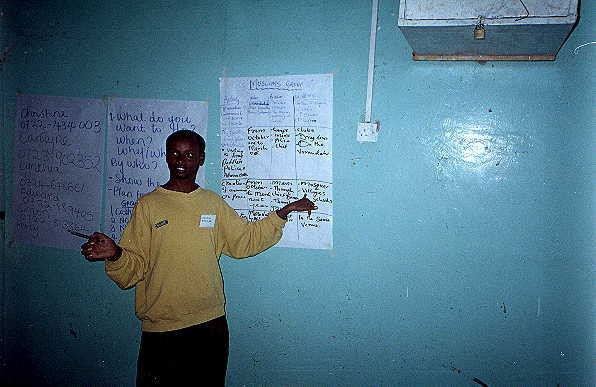
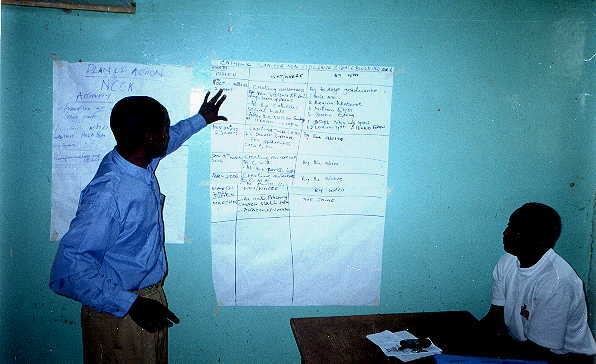
PARTICIPANTS DISPLAYING THEIR ACTION PLANS FOR PEACE BUILDING IN ISIOLO.
TABLE 1. THE ISIOLO YOUTH ACTION PLAN 2005 – 2006
| Month | Activity | Objective | Venue |
| October | – Formation of a youth peace club – Preparation of poems, songs, and drama to sensitize on peace | – Promotion of peace culture in Isiolo – Introducing peace culture during shujaa day to people of Isiolo | Isiolo Stadium |
| November to December | – Prepare arts and projects – Organize a workshop for youth. | – Introduce the peace culture to the youth during the school holidays | Churches and Mosques |
| January to February | – Organize a workshop for inter-ethnic opinion leaders of Isiolo district | – Bring elders of all communities together on the principles of Active Non-Violence | Wabera Primary School Isiolo. |
TABLE 2. THE MUSLIM FAITH ACTION PLAN 2005 – 2006
| Month | Activity | Leaders | Venue |
| After Ramadhan | Prevention of commercial sex workers in Isiolo | – Imams, Muslim community at large | Madrassa schools, clubs, Mosques |
| October to March | – To fight drug abuse, Visiting drug peddlers, Reporting to the relevant authorities. – Creation of awareness on peace | — Imams, Chiefs, police, Groups. | Clubs, Drug dens on the street alleys, Mosques, Villages, Schools. |
| September | – Formation of a networking committee | Group Members | Al-Falah Hall in Isiolo Town |
TABLE.3 THE CATHOLIC FAITH ACTION PLAN 2005 – 2006
| Month | Activity | Leaders | Venue |
| October | Creating awareness on Active Non-violence | Rose Atii, Regina Akatorot, William Ewoi, Simon Edong, J. Lokuniyat. | Catholic Social Hall |
| November | Create awareness at Kambi Ya Juu | Rose Atii, Regina Akatorot, William Ewoi, Simon Edong, J. Lokuniyat. | Catholic Church Grounds. |
| January to February | Creating awareness to both Catholic Men & Women associations. | Rose Atii, Regina Akatorot, William Ewoi, Simon Edong, J, Lokuniyat. | Parish Hall |
TABLE 4. THE NCCK ACTION PLAN 2005 – 2006
| Month | Activity | Done by | Indicator | Venue |
| October | Sensitize group registration | NCCK representative | DCC | DCC |
| November | Group registration | DCC | Certificates | DCC |
| December to February | Planning | Lobby group officials | Plans, proposals and budget | DCC |
| January to February | Facilitating for peace festivities for March | Lobby group officials | Festive Activities in NCCK churches practices | NCCK Churches |
Certificate of Participation
After the workshop, the participants were issued with certificates of participation
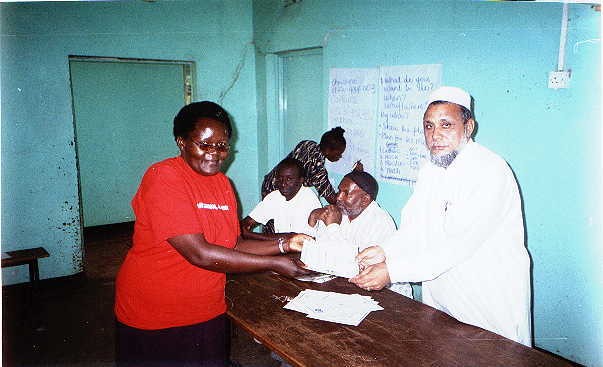
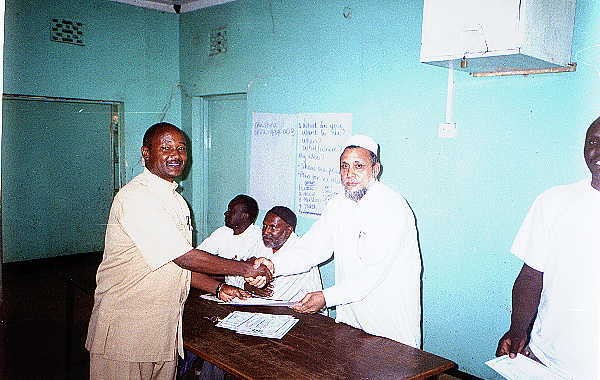
PARTICIPANTS RECEIVING THEIR CERTIFICATES OF PARTICIPATION.
THE SCHOOL REHABILITATION WORKS AT ISIOLO
The school rehabilitation works were carried out at: Wabera Primary school and the “Kambi ya Juu” Integrated Primary School. The rehabilitation activity involved both the workshop participants and the local community.
Wabera Primary School
In Wabera primary school, forty litters of emulsion paint were donated to the school for the painting of the classroom walls.
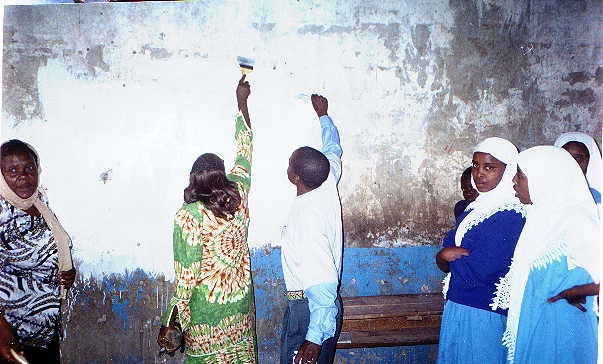
PAINTING OF THE CLASSROOM WALLS
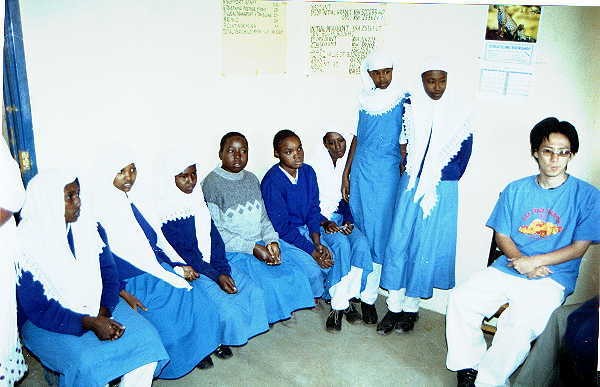
WABERA SCHOOL PUPILS IN ONE OF THE PAINTED CLASSROOMS.
During the PEACE WEEK EVENT, four dozens of sanitary towels were donated by the project sponsors to benefit the girl child education program. The school administration was very happy and grateful to the support. The school reported that the lack of provisions of such essential items to the girls had affected their education due to absenteeism in class. This was attributed mainly to the poverty levels in the community. The school made a passionate appeal to meet this need to all that care about the girl-child education.
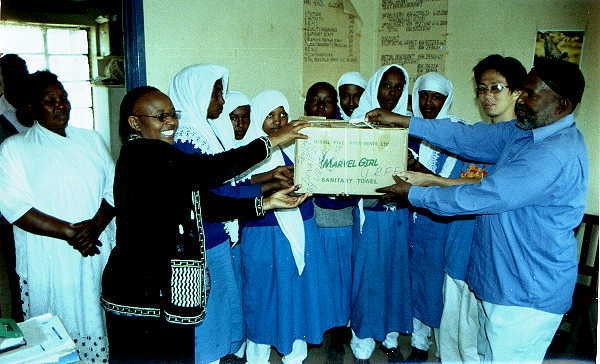
A SANITARY TOWELS DONATION TO THE SCHOOL’S HEAD TEACHER OF WABERA SCHOOL
During the working sessions at the Wabera School, the students of the school took time to entertain the participants with songs and poems.
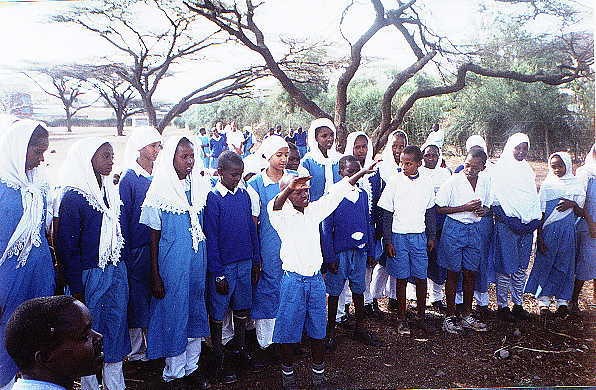
WABERA SCHOOL STUDENTS PROVIDING A POEM AND A SONG.
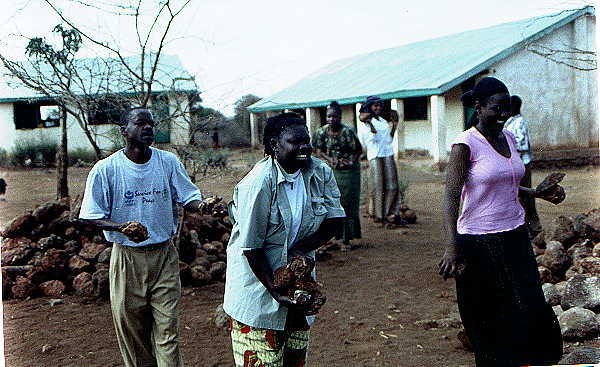
Kambi Ya Juu Primary School
At the start of the project activity at “Kambi Ya Juu” Primary School, the project sponsors called for the cooperation and commitment of the local community and the school’s administration towards the successful implementation of the project.
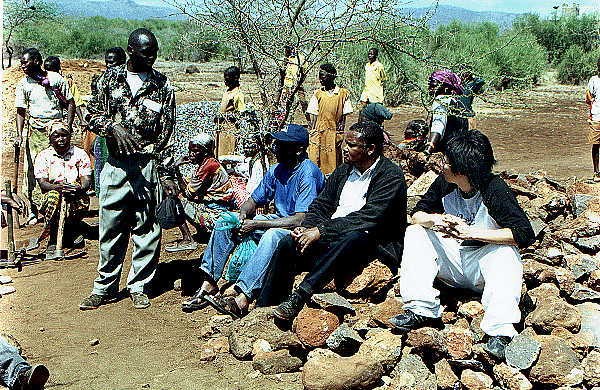
PARTICIPANTS AT THE PROJECT SITE, KAMBI YA JUU PRIMARY SCHOOL, ISIOLO.
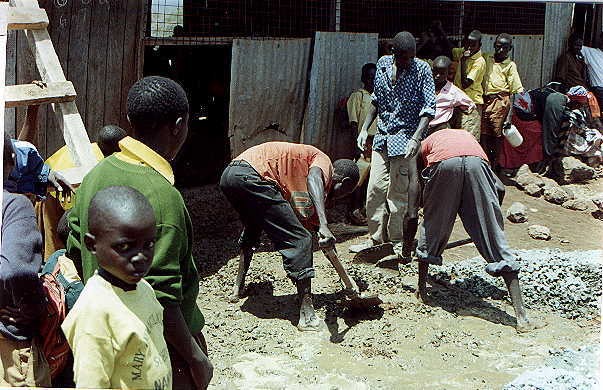
The main project activity at this school was the rehabilitation of two lower primary school classrooms – which were in a pathetic situation of disrepair. The floors were un-cemented and the walls had gapping holes of broken wood. The children’s feet in these classes were often infested with jiggers. During the rainy seasons, coughs and colds were prominent illnesses affecting the children. Besides the aforementioned state of affairs, a section of the classroom roof had been ripped-off by the wind.
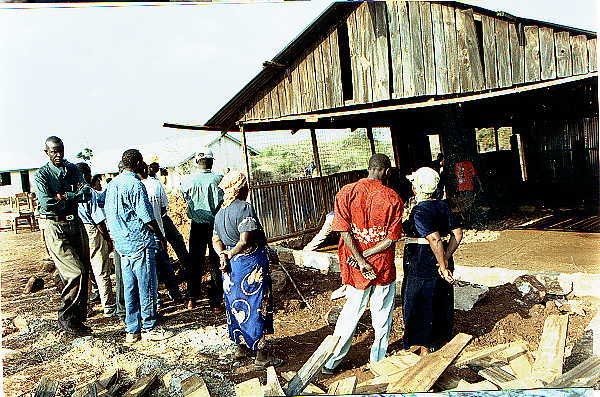
PARTICIPANTS WORKING ON THE SCHOOLS WOODEN WALLS.
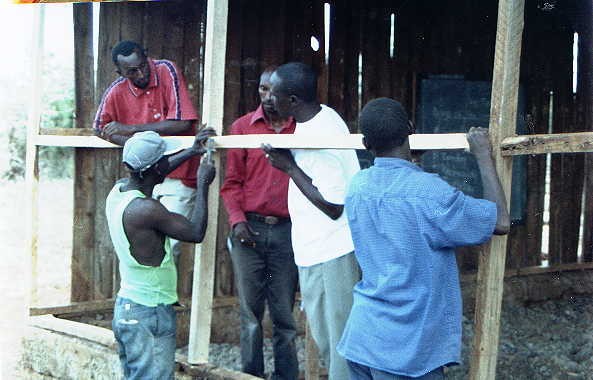
PARTICIPANTS REPAIRING THE CLASSROOM WALLS.
The activity here saw the overhaul of the floor so as to fix concrete and cement the floor, a section of the wooden wall was replaced and iron sheets were put in place, the partitioning of the two classrooms was redone. New iron sheets for roofing were put in place to replace the part that had been blown by the wind. New timber was fixed to replace the weak ones.
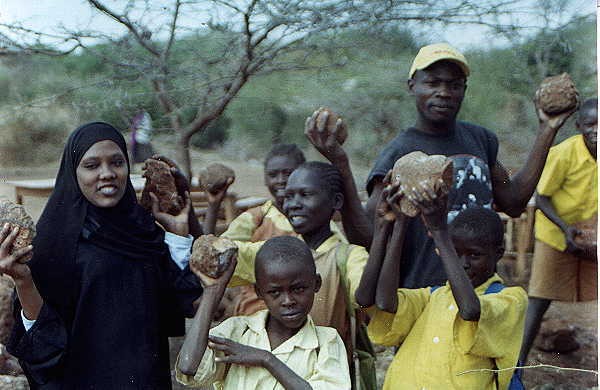
The community contributed greatly considering the state of poverty in the interior rural Isiolo. The community at Kambi ya juu, are very poor and are living at the level of less than $1dollar a day. Their contribution was well appreciated as they provided the unskilled labor during the project by the women together with the school pupils fetching water from a stream, required for the two-class room floor re-construction. They gathered stones as well needed during the reconstruction. The teen-age youths applied their energies to mix the concrete and cement, fixing the timber and the iron sheets. The community also contributed with the provision of skilled labor that helped very much in guiding the working team on what was to be done. The administration block walls were also painted.
The presence of project participants from outside Isiolo played an important role especially in the interaction and share ring of ideas and experiences.
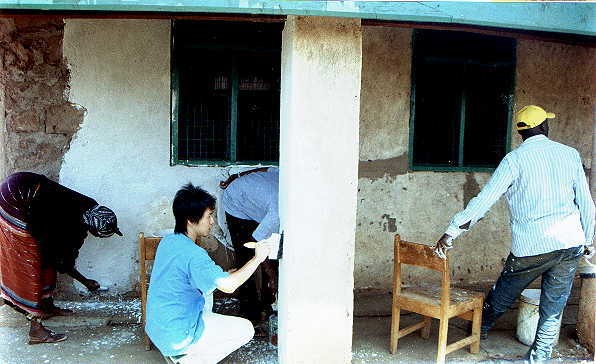
The locals at Kambi ya Juu had an opportunity to interact with one of the project participants from Japan, Eisuke Inose.
After 5days of work at the school, came the closing of the activity. In a short speech Edward of Urafiki (IRFF) encourage the parents together with the teachers to join hands and contribute to the building of the school, which would even give the well wishers and donors the spirit to help them more.
The head teacher requested for future support for the blind students at the school.
The parents who participated in the project activity were very happy and said that the jigger problem in the feet of the small children will now be a thing of the past.
A quick survey was done on the classrooms under reconstruction and stock was taken of what needed to be done next since there was still work to be done to complete the project. At this time the project was handed over to the school and the community together with materials to work so as to complete the reconstruction. He encouraged the women living in the Kambi Ya Juu community to form groups and come up with proposals for income generating activities that would get micro financing for developments in the future.
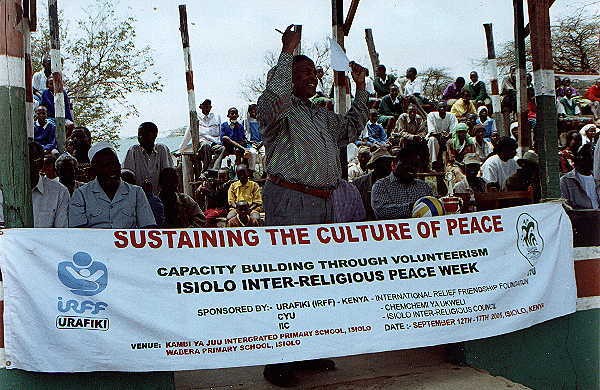
The Baraza Day 16th September 2005
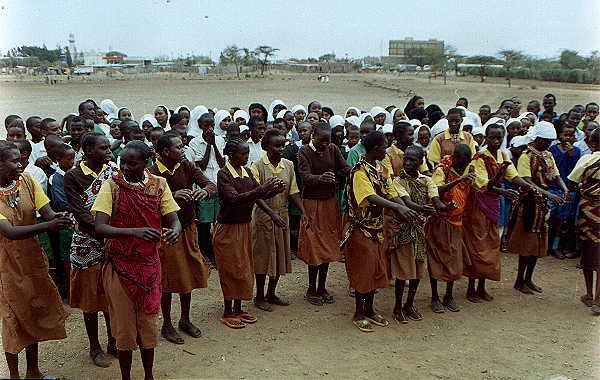
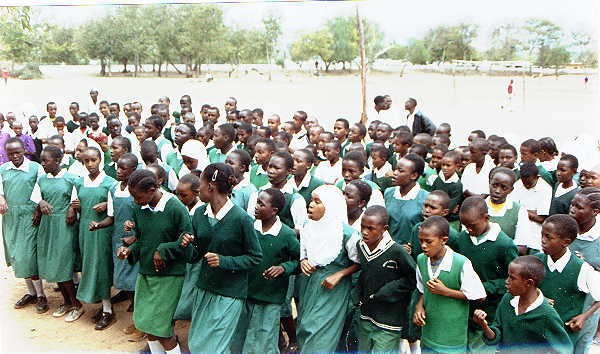
The day being the final day of the peace week event was marked by a peace procession that started at the Wabera Primary School. Leading the cue during the peace procession was various schools in Isiolo area. Just before the start the Kenya National Anthem was sung after which the marched started and passed through the main street of the Isiolo Township leading to its final stop at the Isiolo sports stadium.
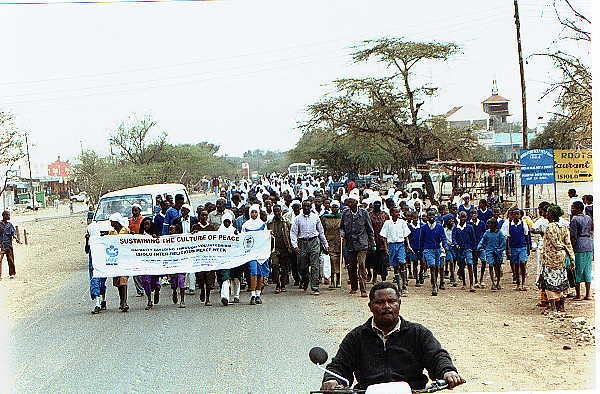
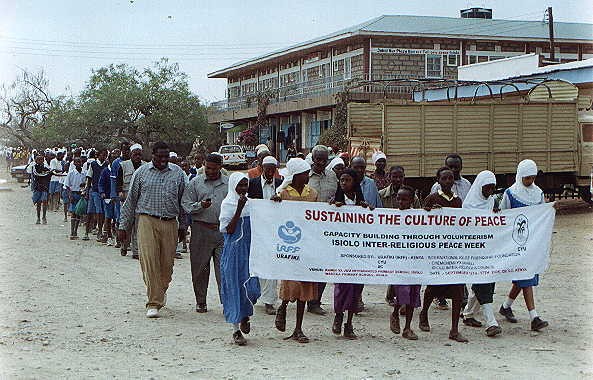
At the stadium students from the various schools made presentations of songs, poems, and dances relating to peace building The invited guest present was the District Officer 1, the District Education Officer, stakeholders in the Isiolo peace process, the faith leaders, school heads and their teachers.
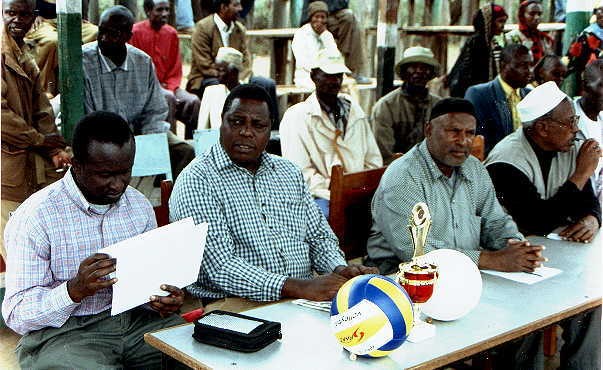
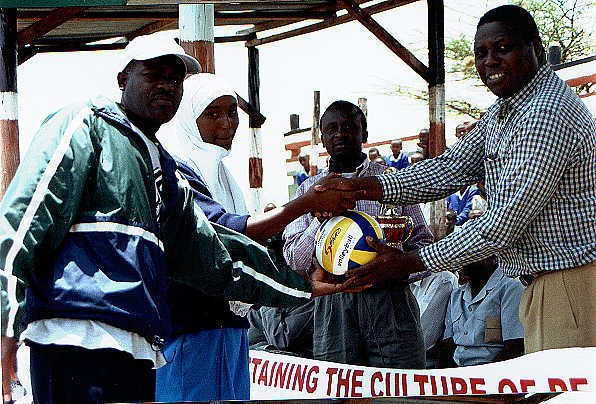
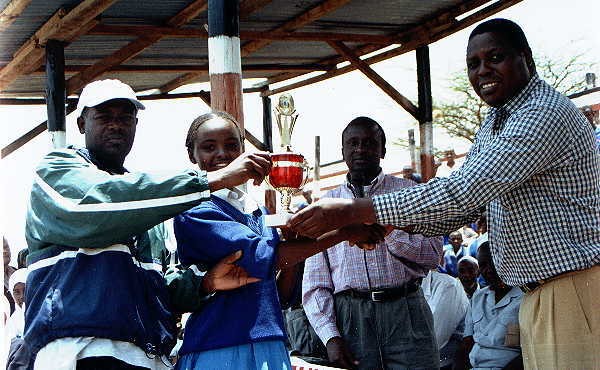
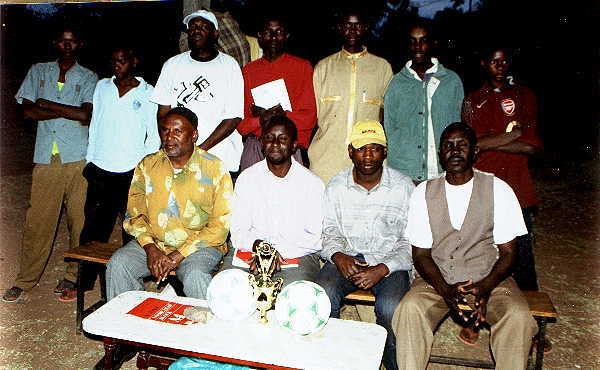
After the various speeches from the guests, Certificates were awarded to the community project participants. Those awarded were The Office of the president (District Commissioner Isiolo), which supported the project through opening it and providing the much needed transport to help reach participants at various points of activity. The District Education Office, Wabera primary school; the girls’ volleyball team of Wabera primary school was awarded a certificate, a volleyball ball, and a trophy as winners of the girls volleyball peace tournament.
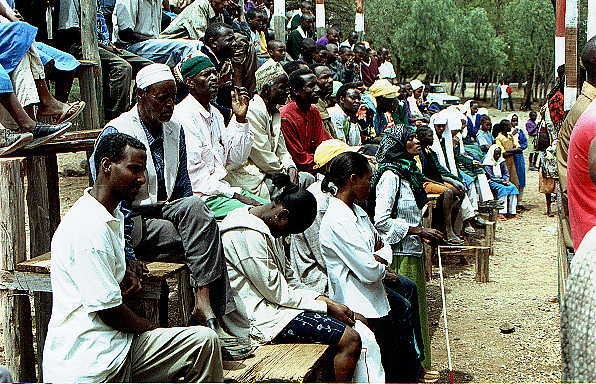
The schoolteachers of both Kambi ya juu and Wabera primary school received certificates in appreciation of their support and participation during the project. Kambi ya juu primary school and the school parents who participated in the classroom reconstruction received certificates.
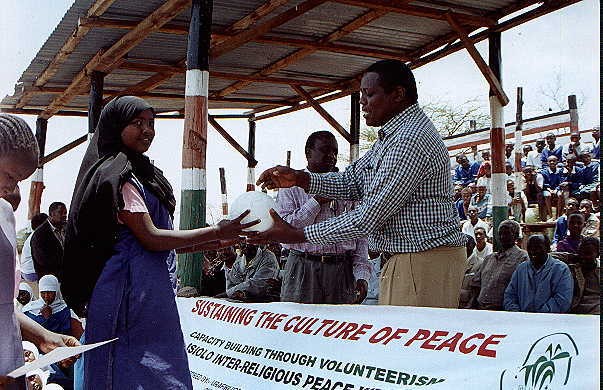
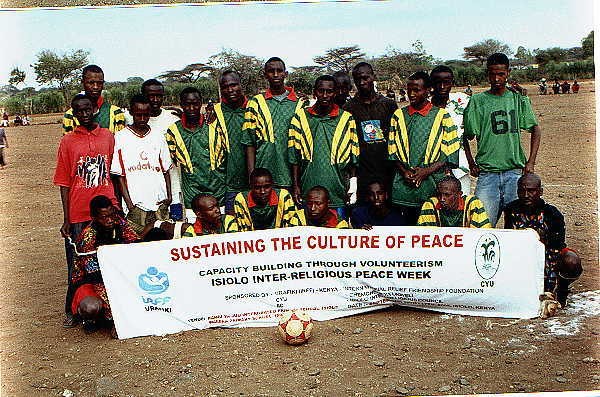
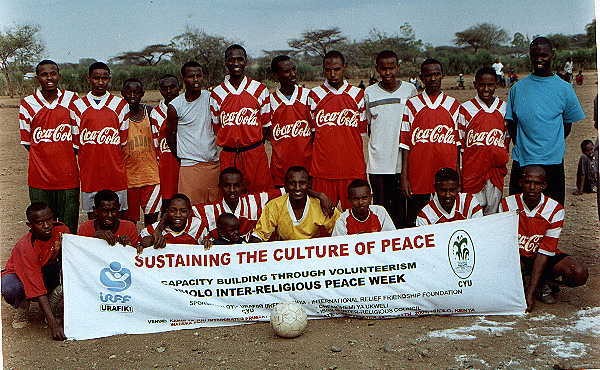
The climax of the events at the stadium baraza day was the finals of the peace tournament football match.
Evaluation
Workshop
It was observed that during lunch on the first day, the participants from outside Isiolo together with the project sponsors and organizers had their lunch at a separate venue.
This did not auger well with the local participants, since they felt underprivileged. They further complained about the food served on that day as bad.
The situation was arrested when Edward, one of the project officials did a personal tasting of the food and found nothing wrong. The food was rather tasty and good.
The person in charge of the food preparation apologized and promised to make it better. Peace was restored and the process continued well.
The participants from outside Isiolo and the project officials changed to having the same lunch with the local participants as a solution to the problem.
The need for special diets for some participants in the workshop was noticed and addressed.
The local participants abused provision of writing materials. It was concluded that next time, workshop participants would be required to come with their own writing materials.
As a result of inconsistency experienced during registration of the workshop participants, the organizers suggested a pre-qualification of participants by local coordinator on the ground after which their names would be sent to the project organizing office from where the participant’s invitation letter would be processed and sent to the local coordinator on the ground for distribution. Participants would be required to produce the invitation letter during registration at the workshop venue.
The target group was not realized during the workshop. Most of the participants were those who had attended past peace building workshops. The intended target group was teachers and youth representation from different schools and youth groups in the area.
Active youth involvement was lacking in the workshop. However the youth population that attended the workshop was rather small. Considering the ratio between the old and the young, the old outnumbered the young generation.
The proposed number for participants was far outstretched, as those who participated were more. It was suggested that strict registration procedures be followed in the future for efficient budgetary purposes.
Follow-ups after projects was mentioned as important by the locals as they said it helped to add strength to the process and meeting the set up goals such as action plan set by the workshop participants.
A need to set up a small coordination desk within one of the project collaborating institutions became evident, considering the peace project associated activities e.g. the intended Micro-finance project.
It was noted that it is important to make early planning and preparations for activities so as to allow enough time for project grant seeking support.
 English