The project’s goal
In collaboration with the IRFF and CARP-Germany, Urafiki Kenya NGO launched this integrated initiative in the Kibwezi region of eastern Kenya. Its goal is to strengthen the community’s ability to cope with climate change in this semi-arid region. Increasing the local community’s ability to deal with and adapt to climate change and variability is the main goal.
Project-supported tree seedlings
Six different tree seedling varieties that were suitable for the local climate were encouraged to be propagated at the elementary schools that were identified as partners in this project. Below is a brief description of each species of tree.
MELIA VOLKENSII
Amazing trees that are transforming lives in parched regions of Kenya
The community is currently focusing on cultivating fast-maturing, drought-resistant tree types with a variety of applications and profitable, in-demand lumber.
Melia Volkensii, a hardwood tree resistant to drought (see Figure 1), is one example of how farmers are coping with the consequences of climate change, including air pollution, soil erosion, and drought. The tree species is known to improve soil quality, raise oxygen levels, improve ground cover, and draw rainfall in addition to combating desertification.
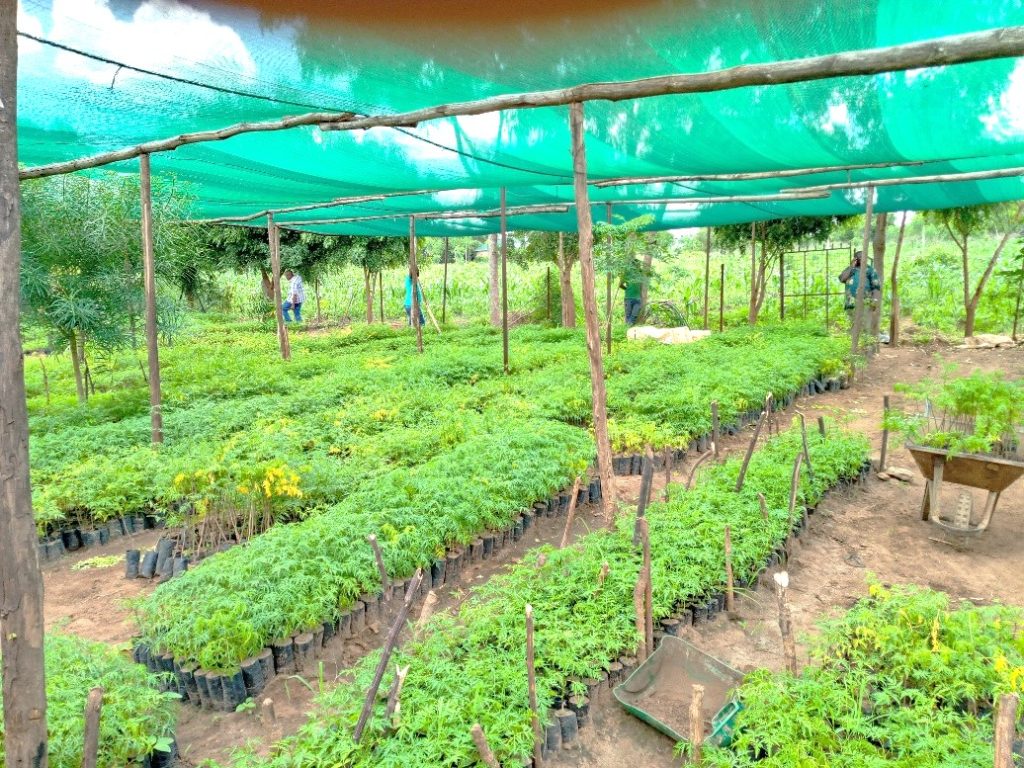
The tree and its products are recognized to offer animals, particularly goats and camels, wholesome fodder; to produce high-quality lumber, poles, and posts; and to be more resilient to termite and borer infestations than other hardwood tree species. The farmers will improve food security in addition to protecting the environment by planting these trees.
GREVILLEA ROBUSTA
The tree and its products are recognized to offer animals, particularly goats and camels, wholesome fodder; to produce high-quality lumber, poles, and posts; and to be more resilient to termite and borer infestations than other hardwood tree species. The farmers will improve food security in addition to protecting the environment by planting these trees.
A fully grown grevillea tree can reach heights of up to 40 meters in its natural forest habitat, although those grown on farms typically attain about 30 meters at maturity. The Kenya Forestry Research Institute (KEFRI) classifies the country into seven ecological zones, but agroforestry is practiced in only five of them, including the Kibwezi region. These zones experience annual rainfall ranging from below 400 mm to over 1,400 mm.
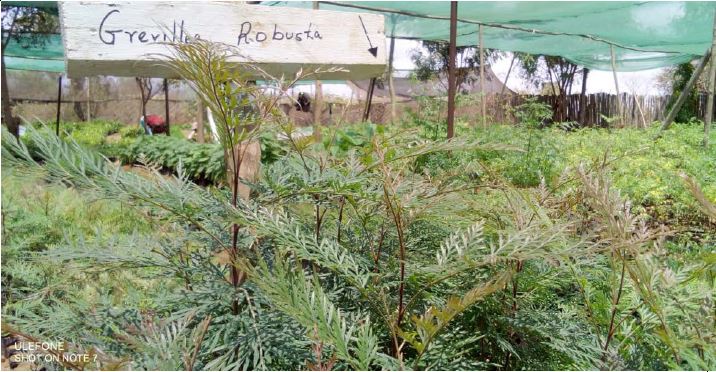
Propagation of grevillea is most commonly done through seedlings. The seeds require no special treatment before planting and usually germinate within two to three weeks after sowing. Once the seedlings are well established, grevillea becomes a tough, drought-tolerant tree that needs minimal management, aside from protection against grazing animals.
Grevillea is highly valued by timber dealers, even more so than whistling pine. It is also an important tree for beekeepers due to its abundant flowering. Being multi-branched like cotton, it is well suited for firewood production, as farmers can harvest branches through pruning without felling the entire tree. In addition, the tree provides charcoal, construction and furniture timber, fodder, bee forage, mulch, soil conservation benefits, and serves as an effective windbreak. Its attractive golden-yellow flowers are especially favored by bees, producing honey of a similar golden color.
Because grevillea retains its leaves throughout the year, it serves as a valuable source of fodder during the dry season, particularly in eastern Kenya, including the Kibwezi area. In this region, the tree is used both to restore depleted soils and as a source of income. Beyond its economic benefits, grevillea supports environmental sustainability by reducing soil erosion and absorbing carbon dioxide from the atmosphere.
The economic value of a grevillea tree increases significantly over time. A seedling may be worth about KSh 100 in its first year, but after five years, its value can rise to nearly fifty times that amount. Despite some challenges—such as local beliefs that the tree attracts lightning near homes—grevillea remains one of the most widely planted and popular trees in Kenya.
NEEM TREE
In Kenya, the neem tree is particularly common in the Coastal region, where it is popularly known in Kiswahili as Muarubaini, meaning “the tree of forty cures.” This tree can grow to about 30 meters in height and has a long lifespan of between 100 and 200 years. It is valued for the shade it provides as well as for its timber.
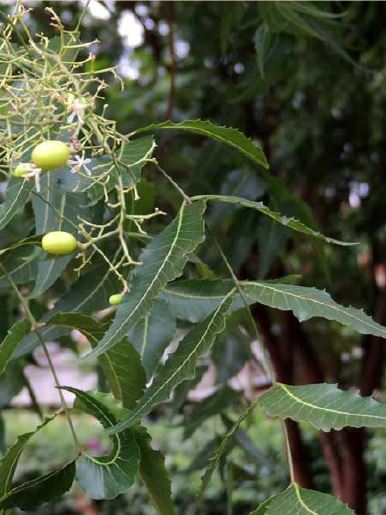
Neem is an evergreen, fast-growing species, which makes it highly suitable for reforestation efforts. Its wood is especially useful for construction since it is naturally resistant to termite attack. When planted on sloping land, neem trees help reduce soil erosion and prevent landslides. In addition, the fallen leaves improve soil quality by reducing acidity. On a smaller scale, neem has also been used as windbreaks, particularly along sisal plantations in Kenya’s coastal areas.
Summary of Project Activities
Tree Planting
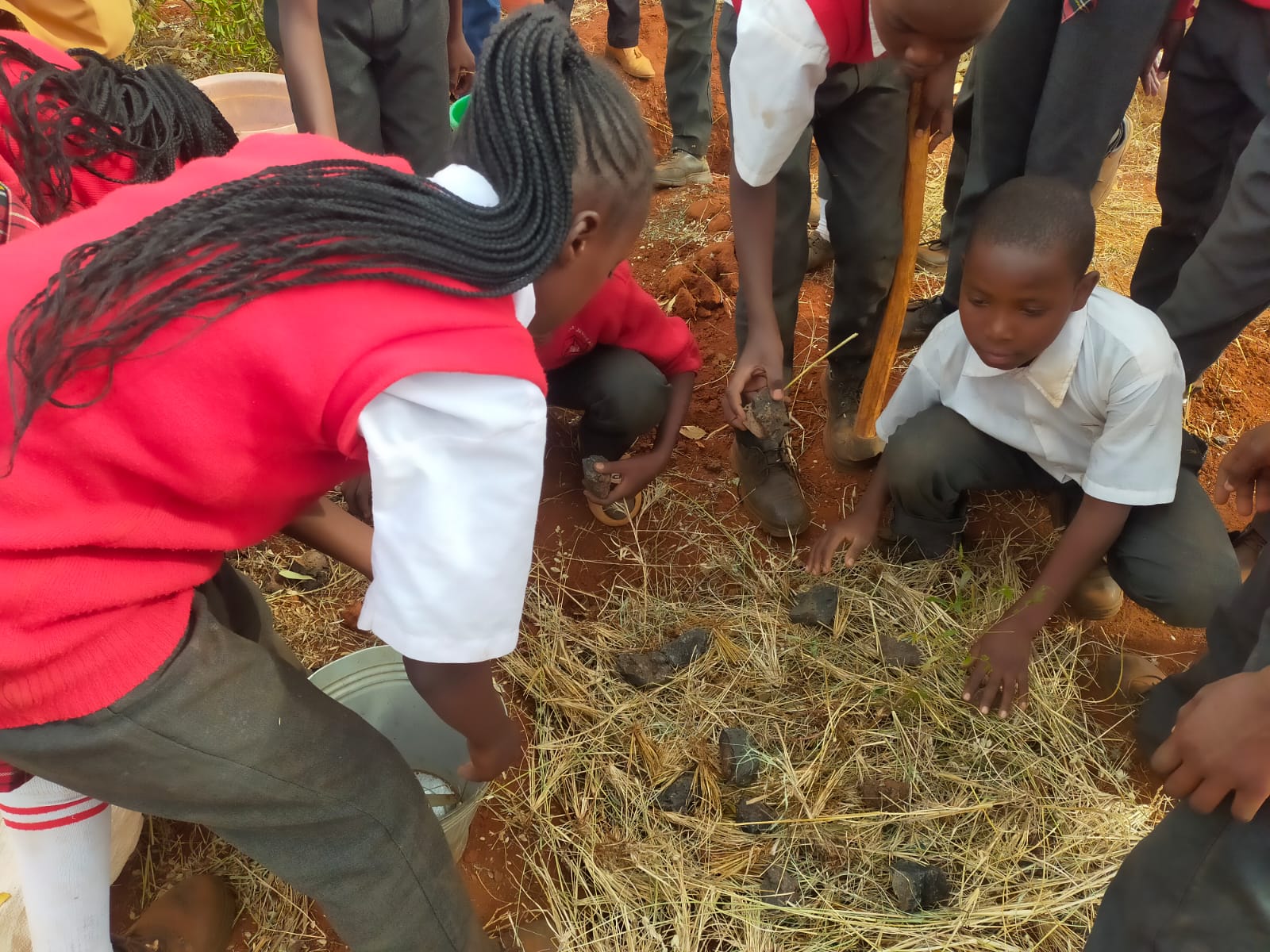
Urafiki Kenya has been collaborating with local communities and educational institutions, including primary and secondary schools, to raise awareness about the importance of afforestation in response to the increasing frequency of drought in recent years. Students have benefited from environmental training sessions conducted by Urafiki Kenya. Through this initiative, a total of 300 tree seedlings were distributed and planted across six selected schools.
Training
In partnership with IRRF-Germany, Urafiki Kenya has supported the project by supplying tree seedlings as well as offering technical guidance and practical training on tree planting and care. As a result, many farmers in the Kibwezi area have increasingly adopted tree planting practices. Participating farmers and the six collaborating schools involved in the 2025 project allocated designated areas within their compounds for tree establishment. The training also covered proper tree management techniques, including pruning and de-budding, to encourage the growth of straight, high-quality timber trees.
Tree Nurseries
Urafiki Kenya, together with IRRF-Germany, aims to link, establish, and scale up several tree nurseries within the Kibwezi project area. One notable example is a successful nursery operated by a local farmer, Ms. Elida Mutie, registered as E. Nine Solutions. Currently, these nurseries are producing tree seedlings more efficiently and in large numbers to satisfy the growing demand among farmers. The seedlings raised possess improved genetic qualities and superior traits. Urafiki Kenya is pleased to have sourced some of its planting materials from this local nursery.
Participating Schools
The schools that took part in the 2025 tree planting activities included:
- High Achievers Academy
- Muatini Primary School
- Matinga Primary School
- Muusini Primary School
- Nyayo Primary School
- Kiaoni primary School
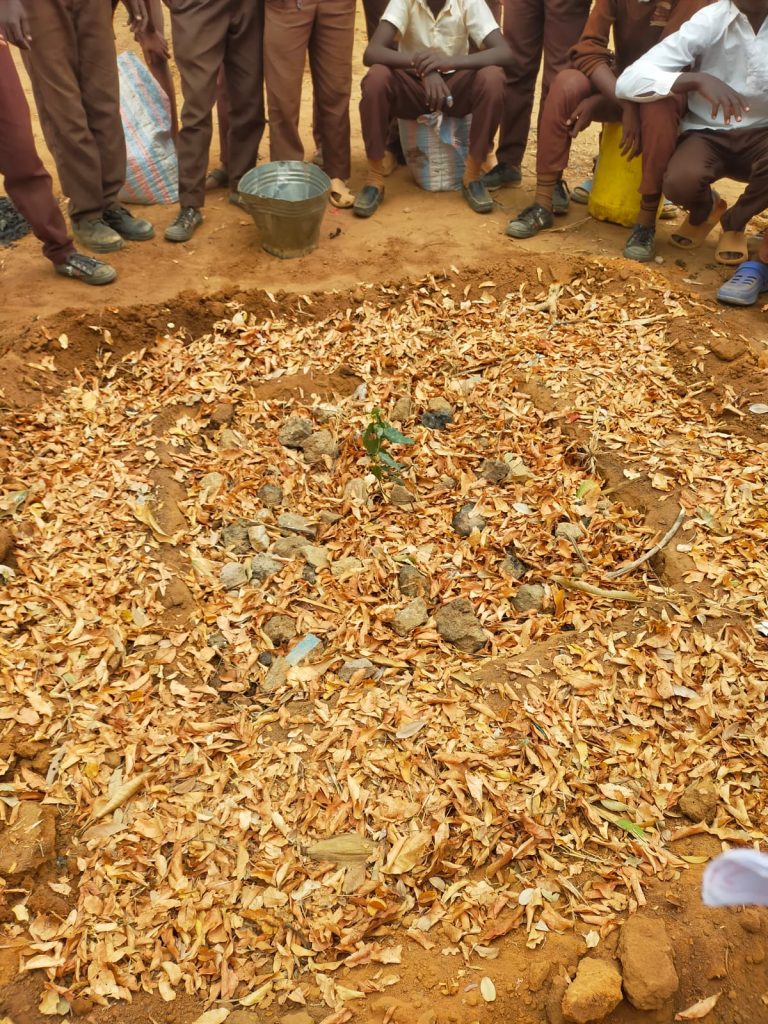
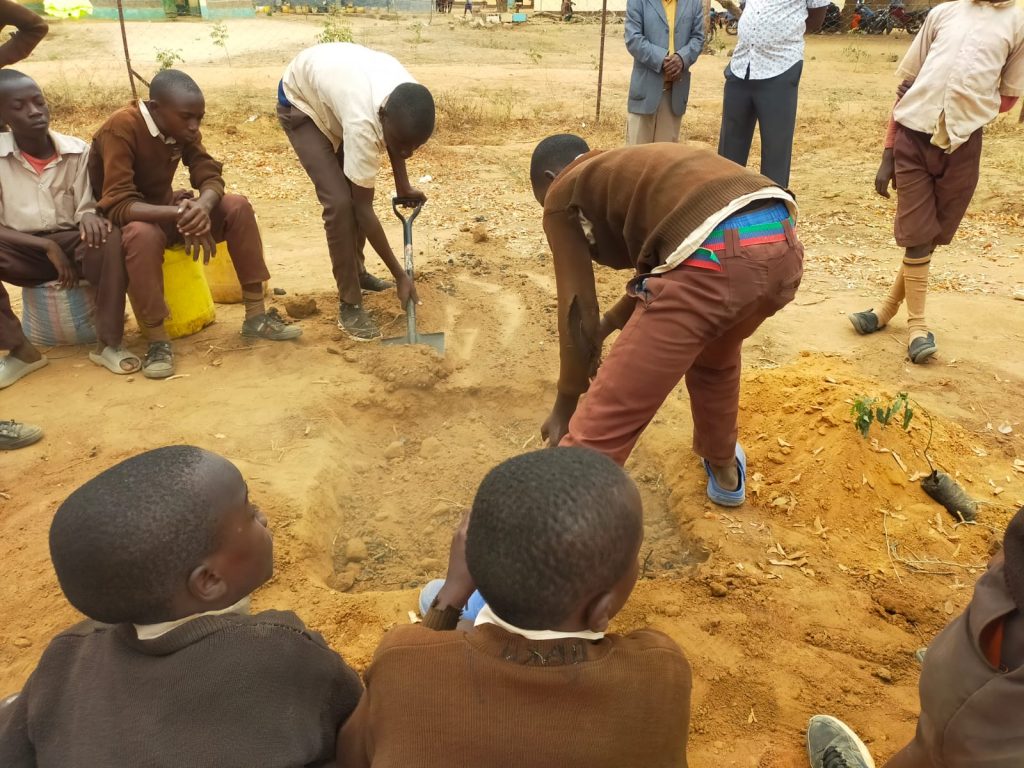
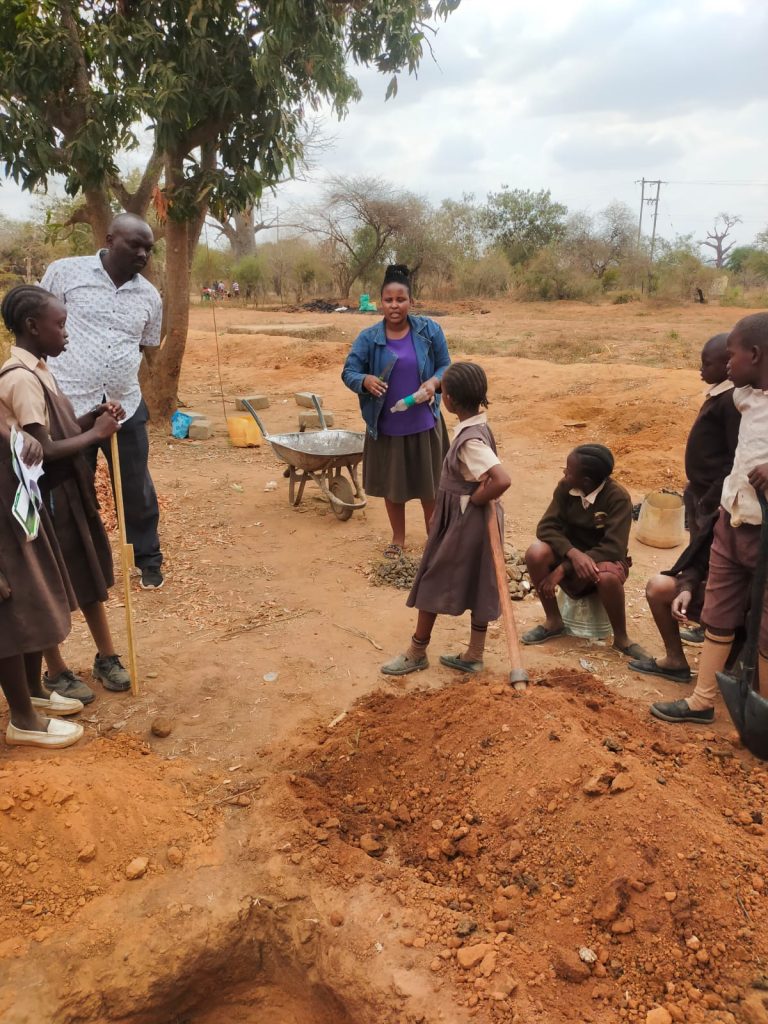
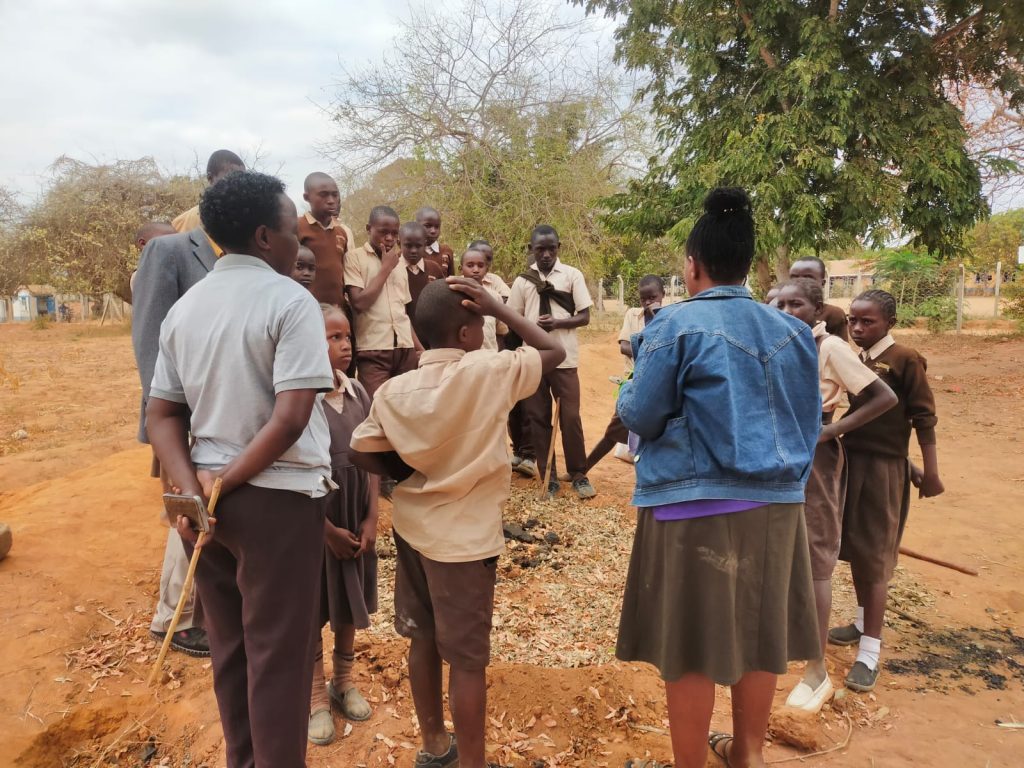
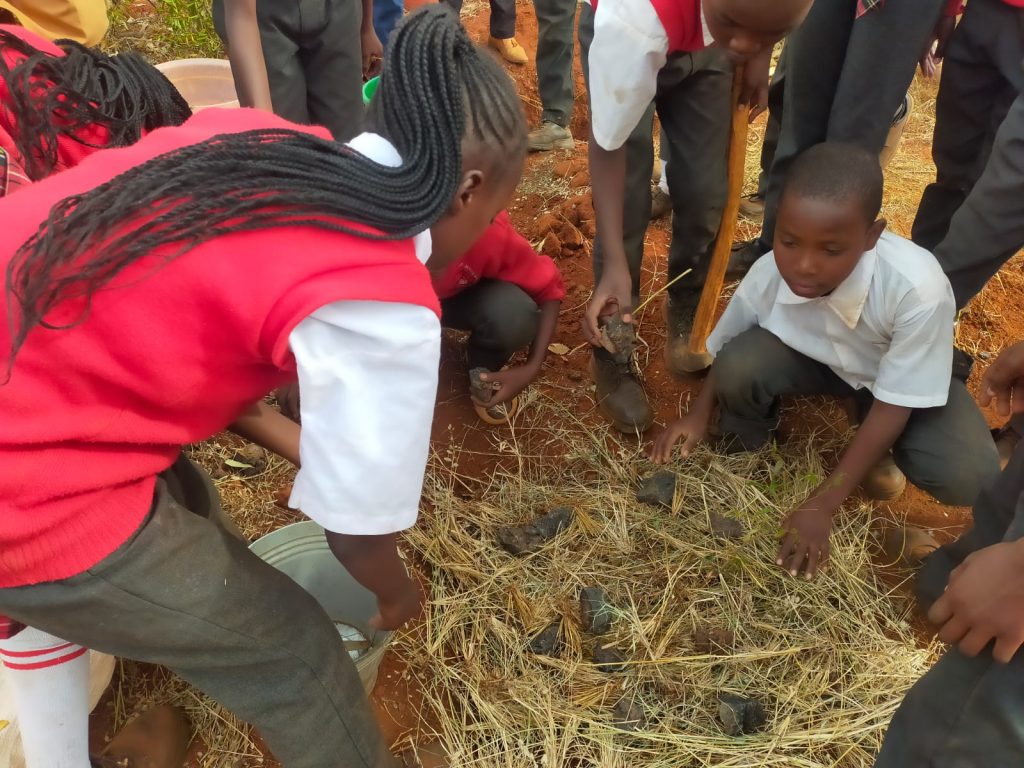
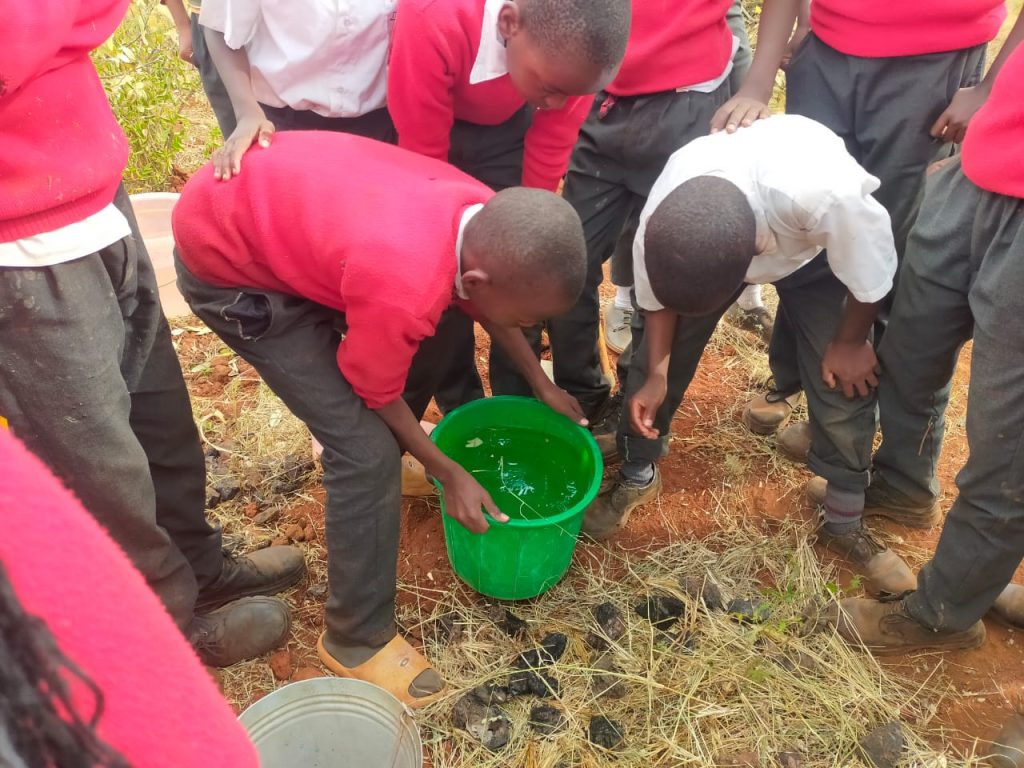
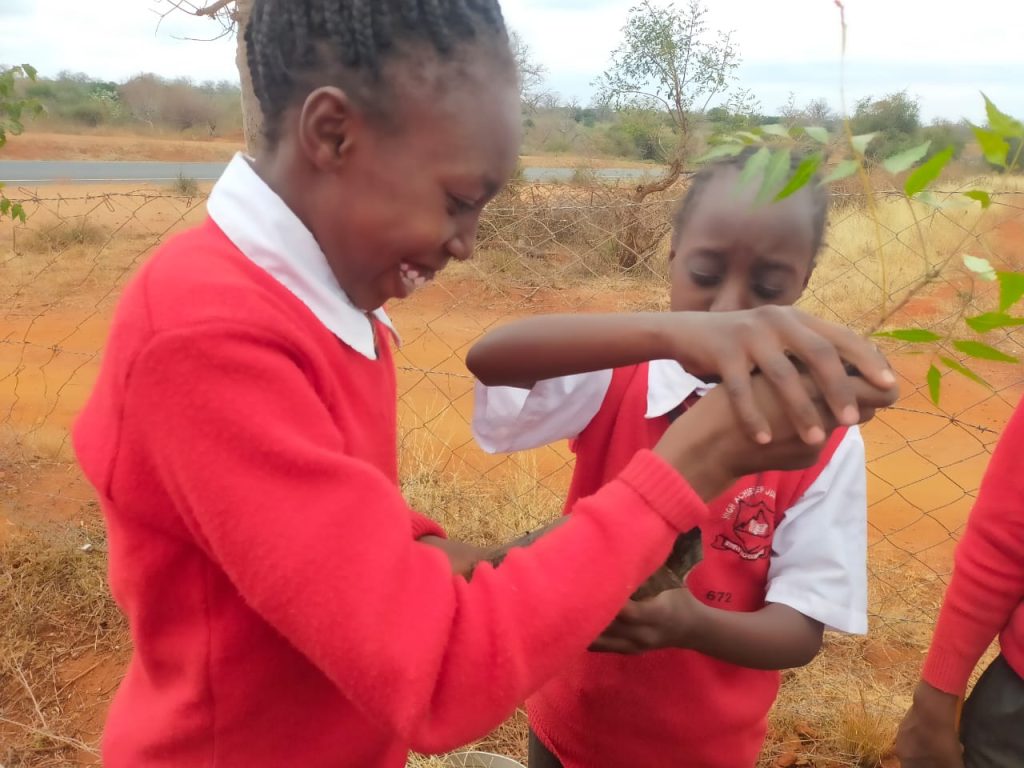
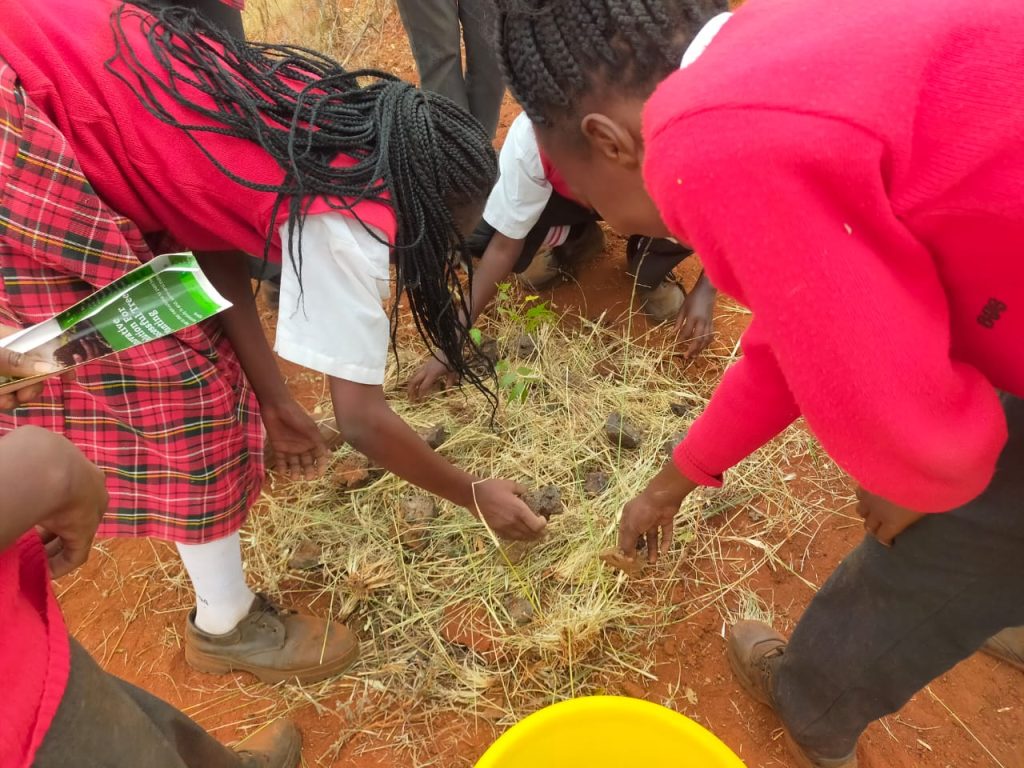
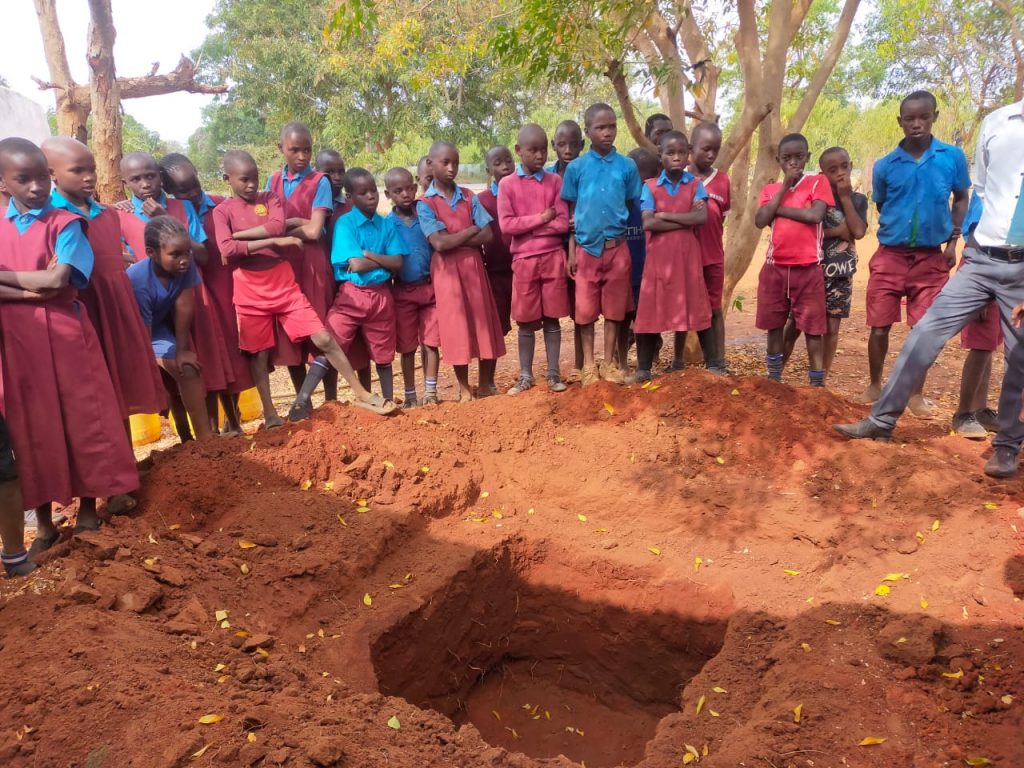
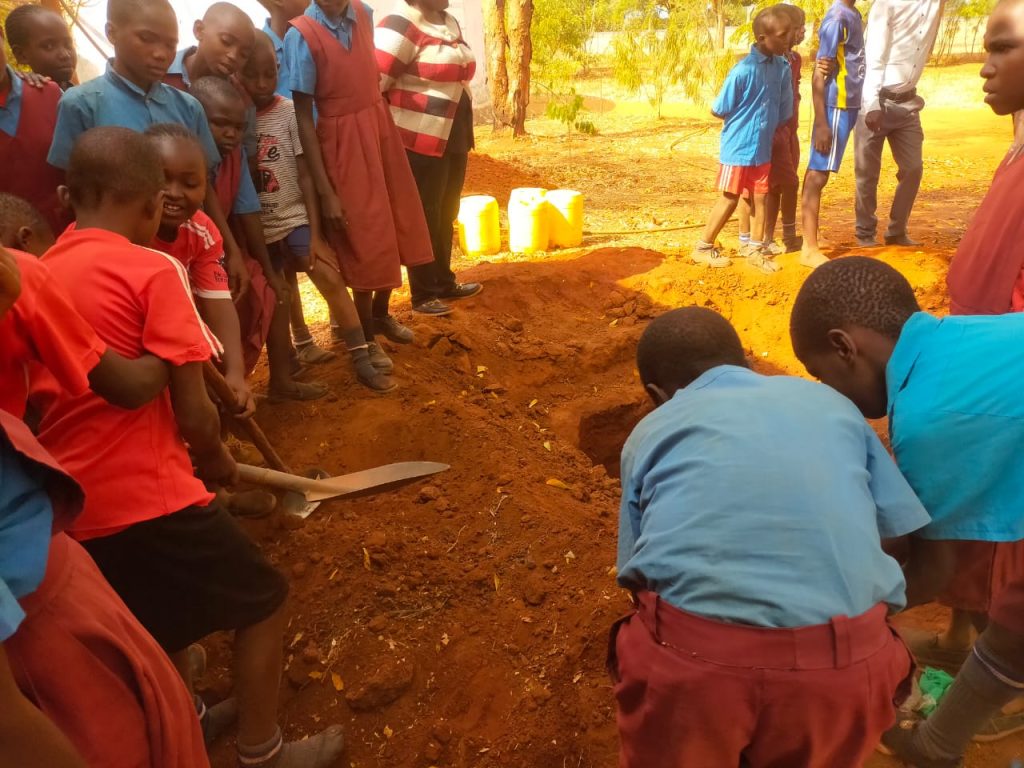
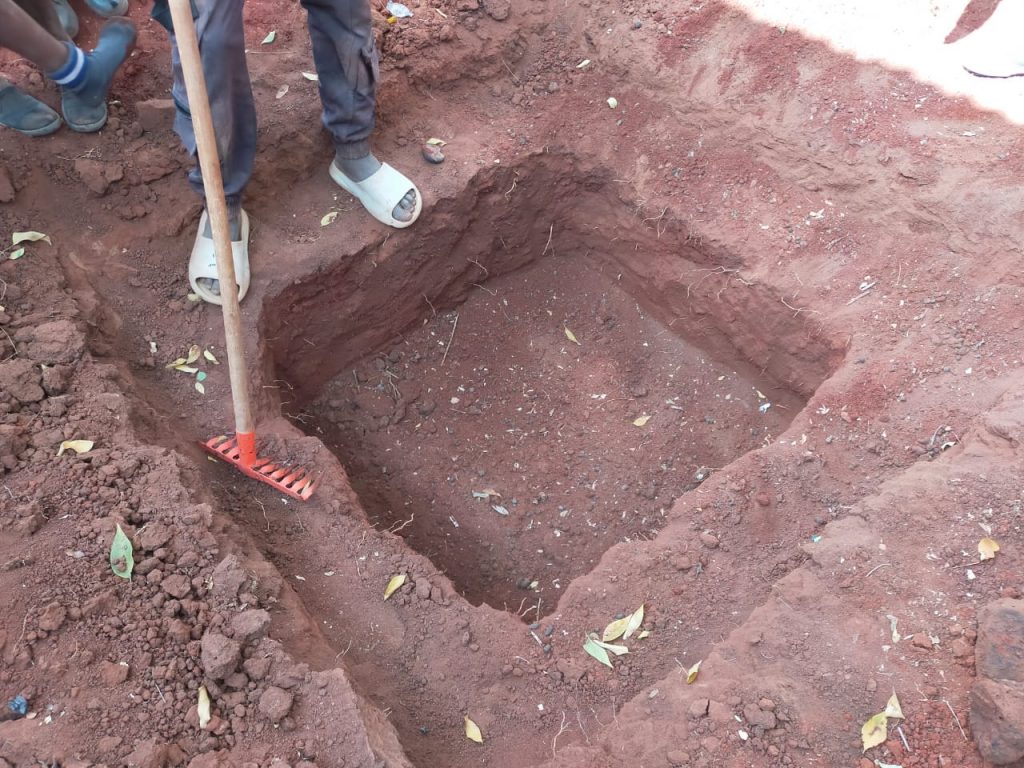
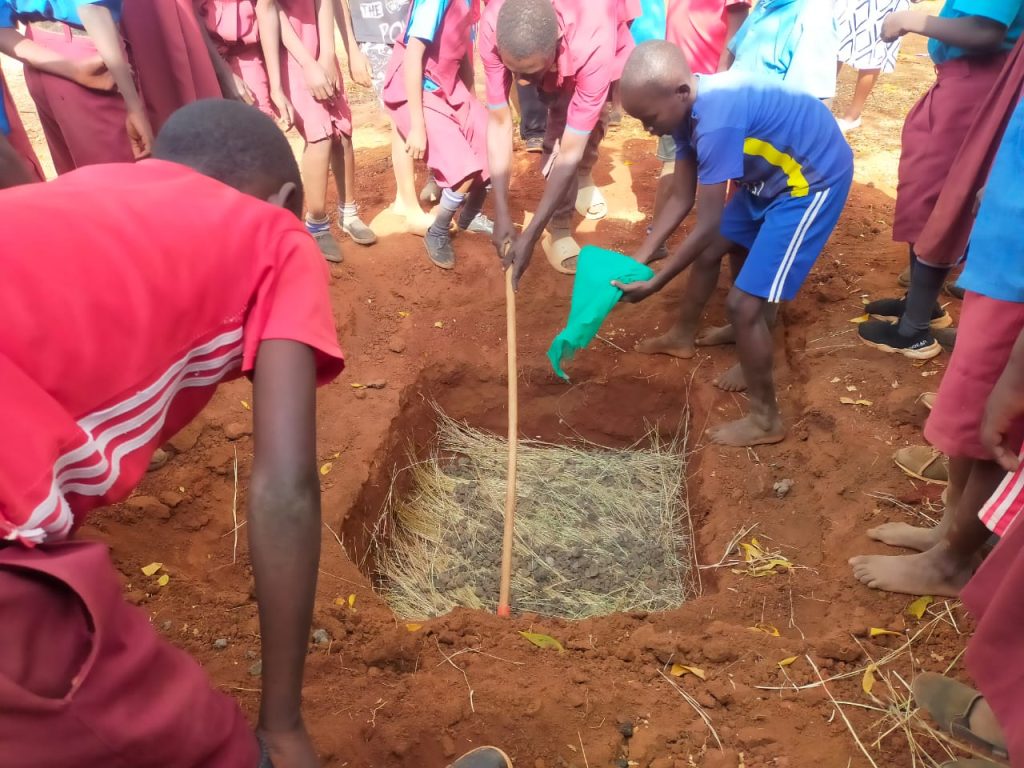
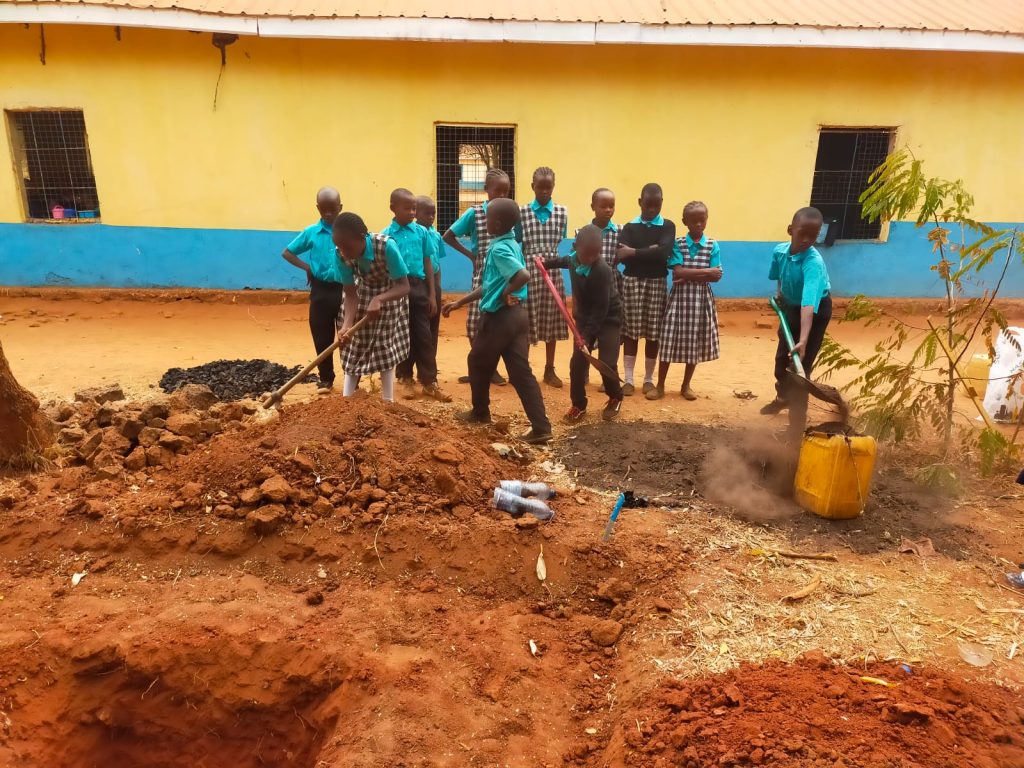
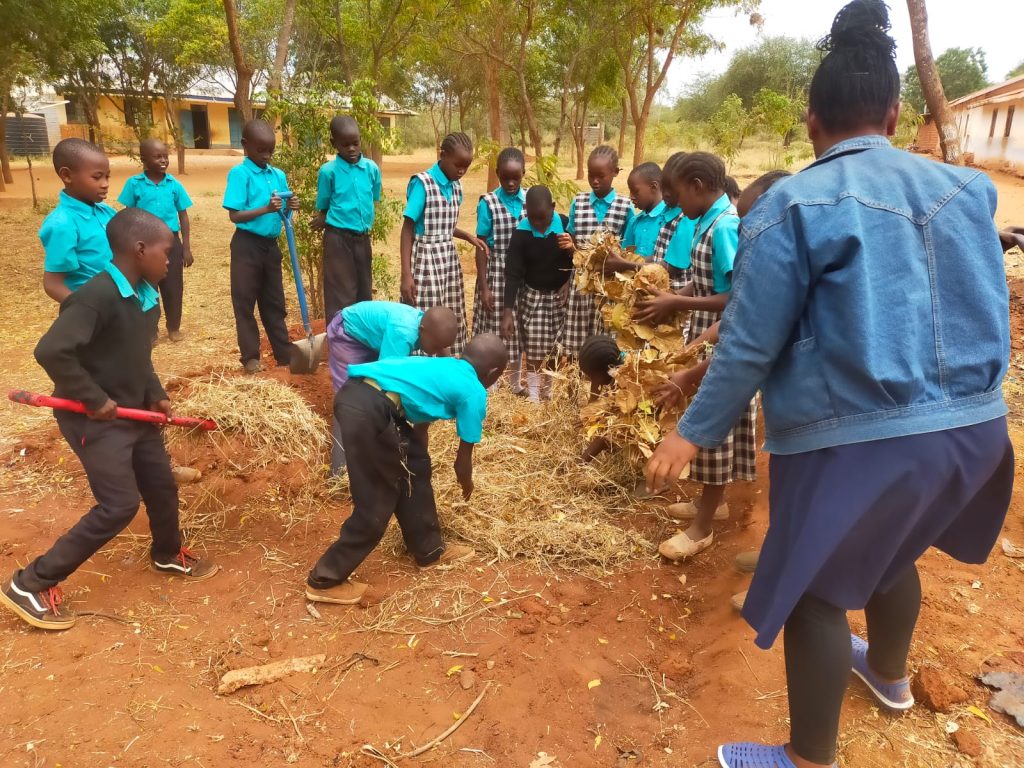
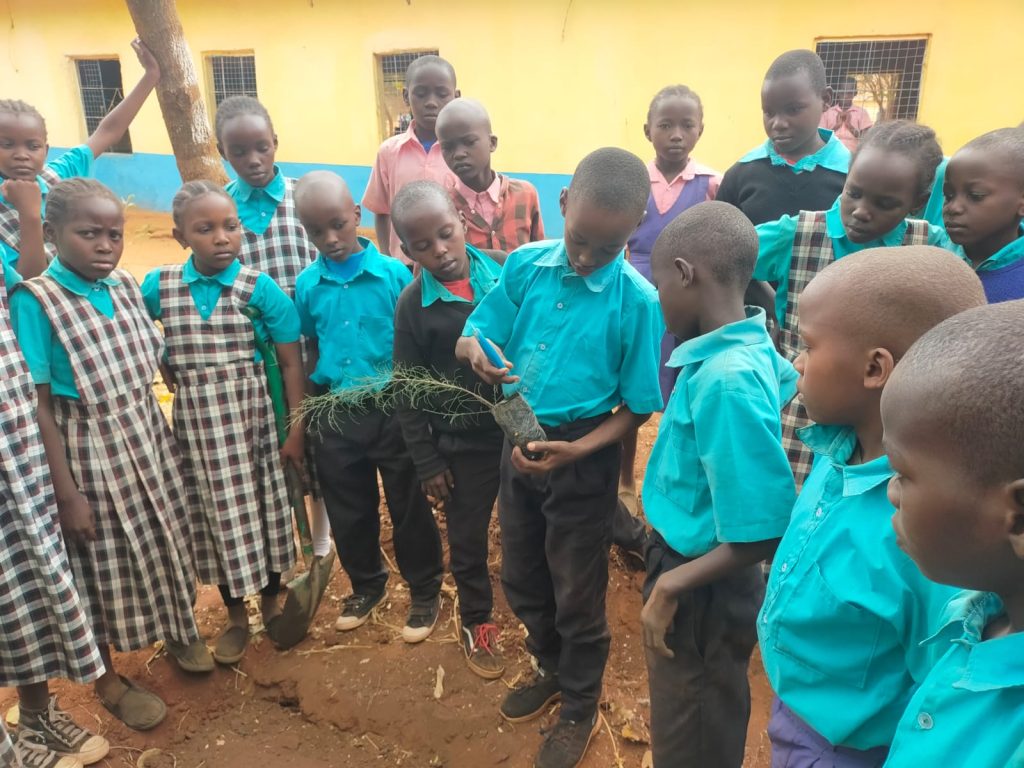
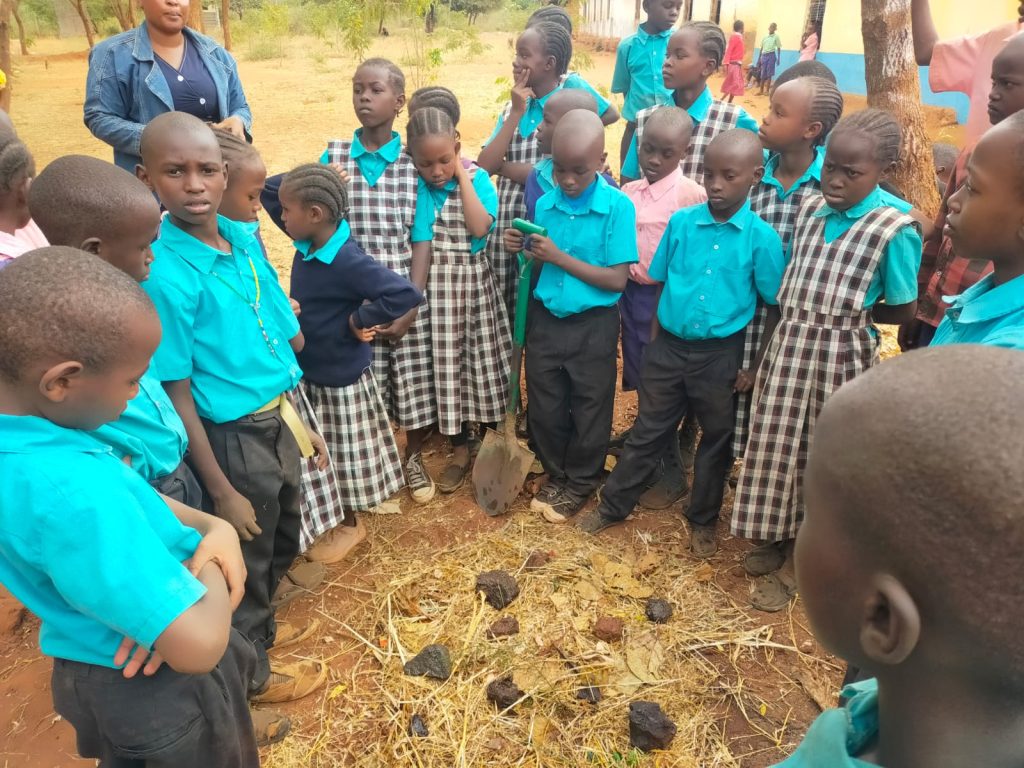
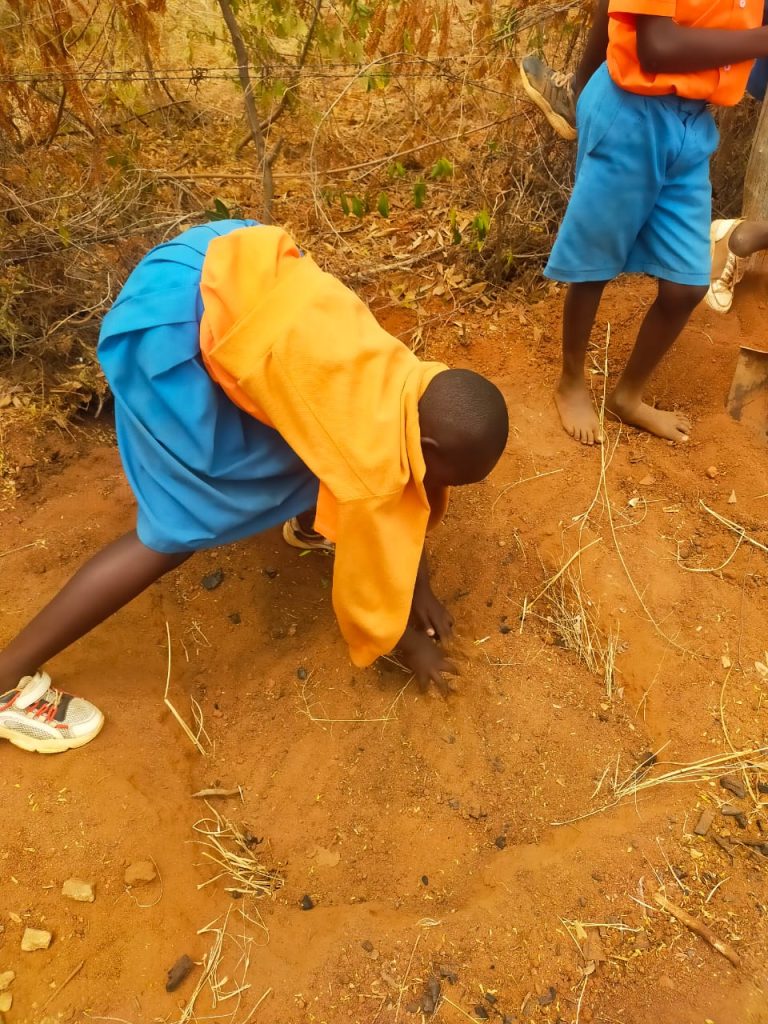
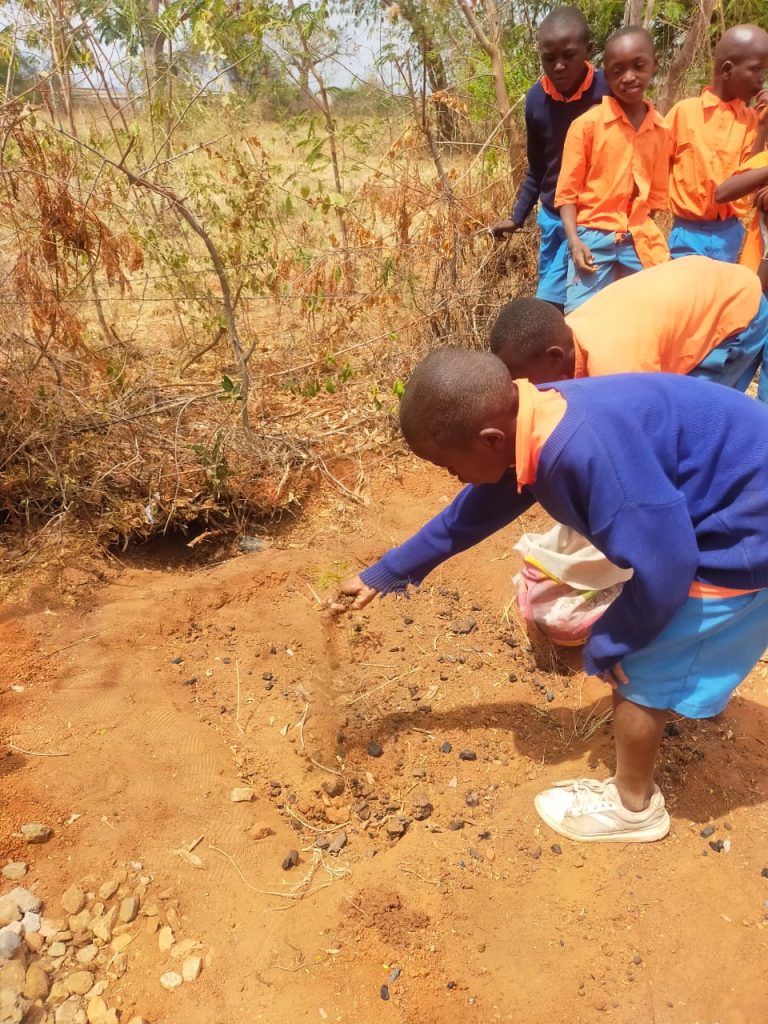
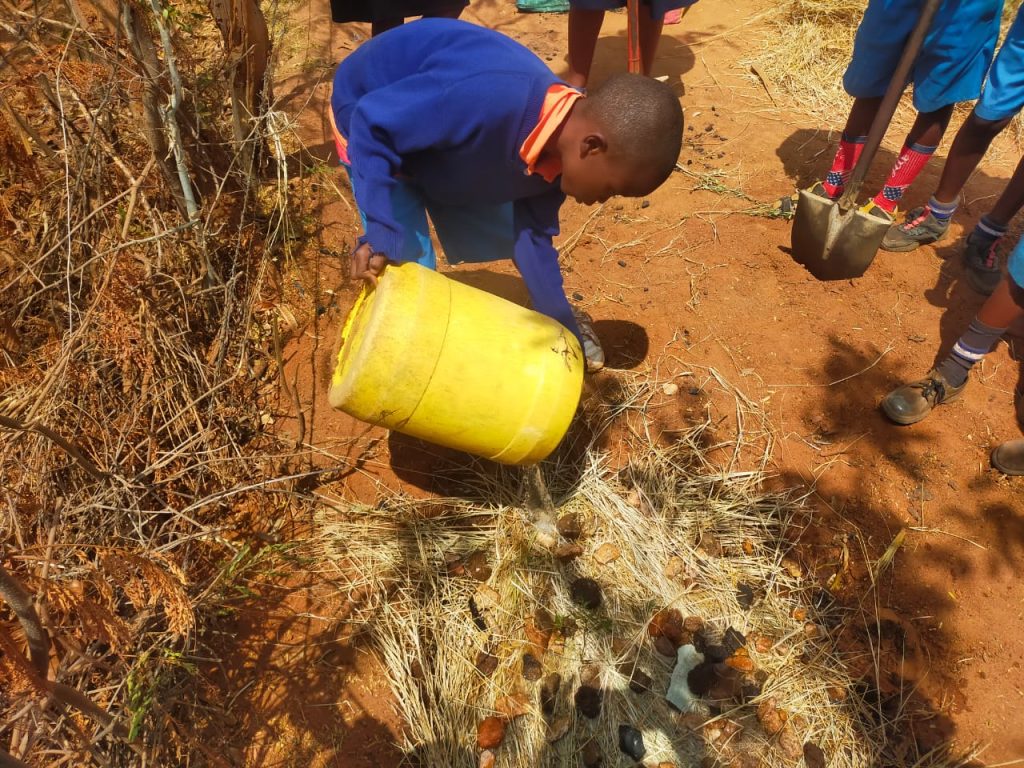
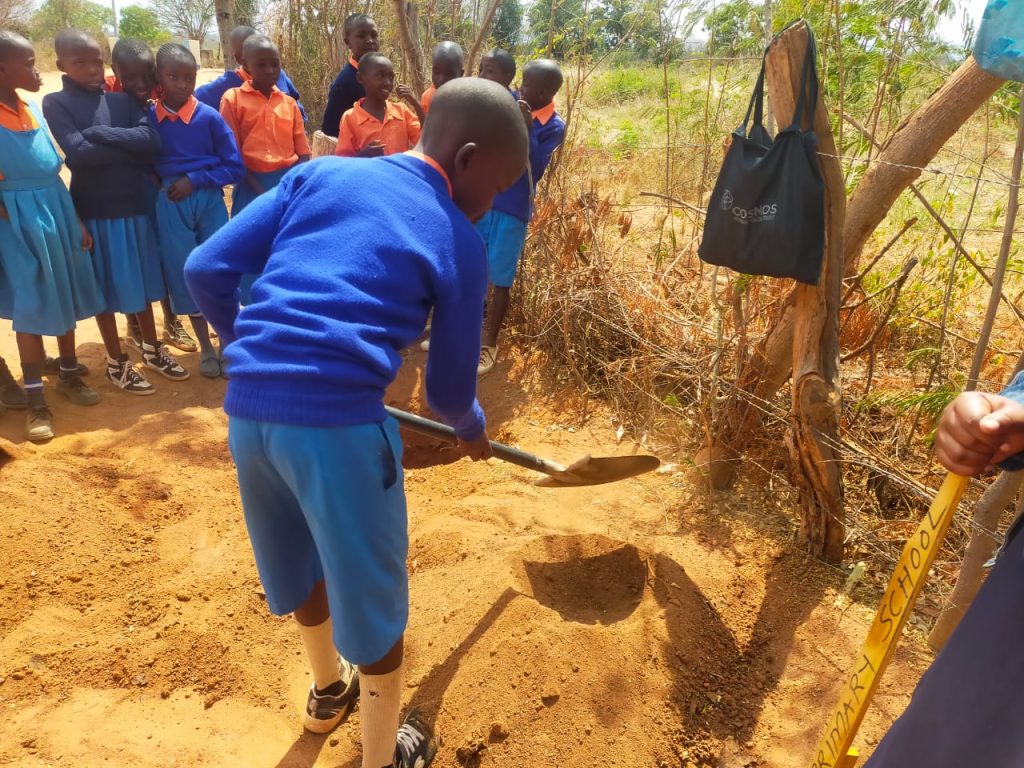
STUDENTS FROM VARIOUS SCHOOLS LEARNING HOW TO PLANT TREES THE RIGHT WAY
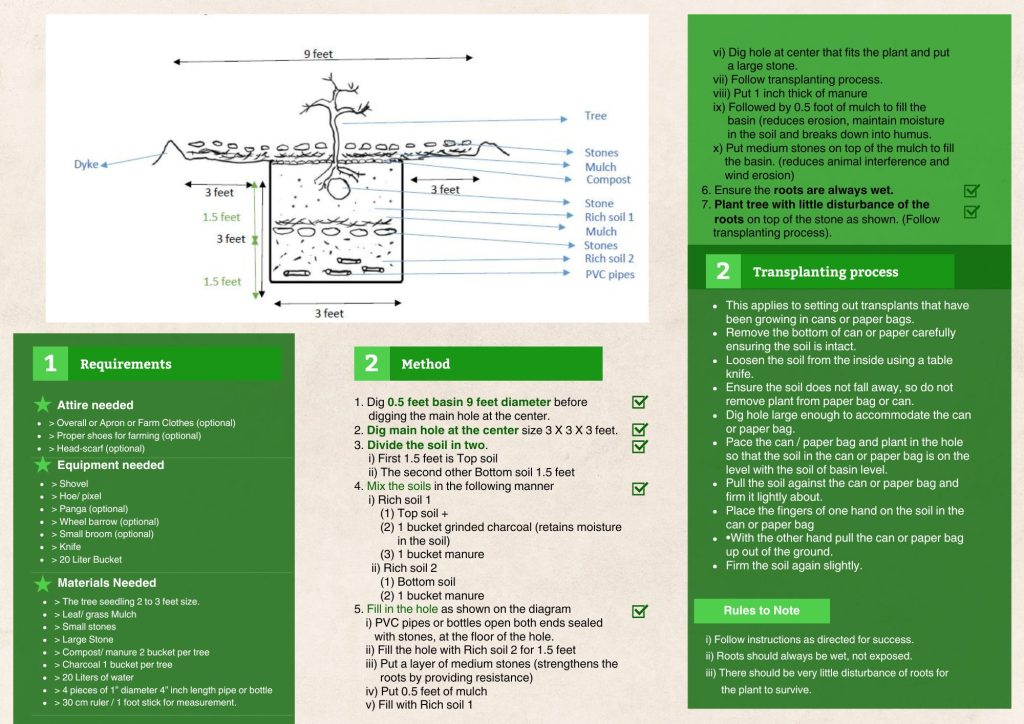
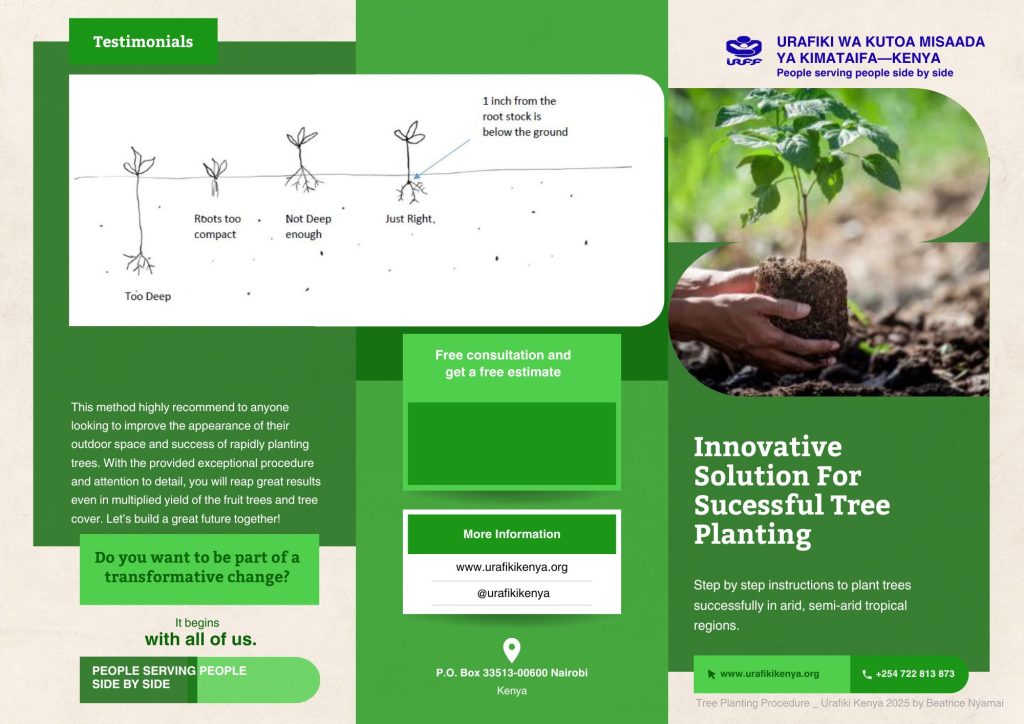
DEMONSTRATION PAMPHLET
 English
No responses yet