ENVIRONMENT SUSTAINABILITY AND AGRICULTURAL DEVELOPMENT
Environmental sustainability and agricultural development are closely interconnected pillars of long-term human well-being and economic growth. Agriculture depends directly on natural resources such as soil, water, biodiversity, and climate, while at the same time significantly influencing their quality and availability. As global populations grow and demand for food increases, unsustainable farming practices—such as overuse of chemical inputs, deforestation, and improper water management—have led to land degradation, loss of biodiversity, and climate change impacts. Integrating environmental sustainability into agricultural development therefore ensures that food production systems meet present needs without compromising the ability of future generations to meet theirs, by promoting practices that conserve ecosystems, enhance productivity, and support resilient rural livelihoods.
KIBWEZI RESOURCE CENTER – POULTRY PROJECT 2016
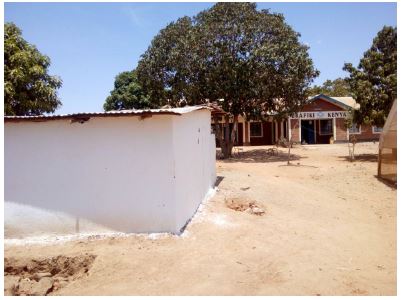
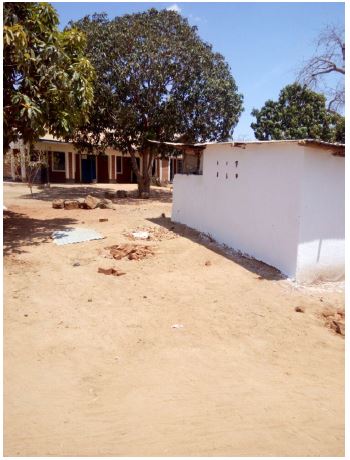
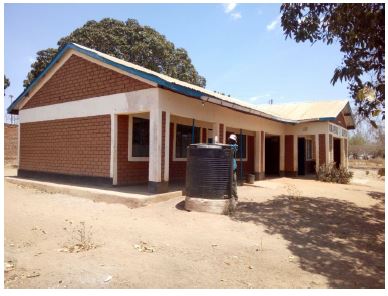
THE NEWLY CONSTRUCTED POULTRY BUILDING STRUCTURE (REAR VIEW) FACING THE KIBWEZI
RESOURCE CENTER (KRC).
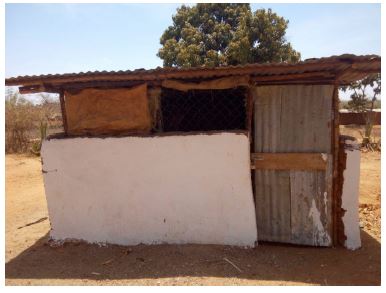
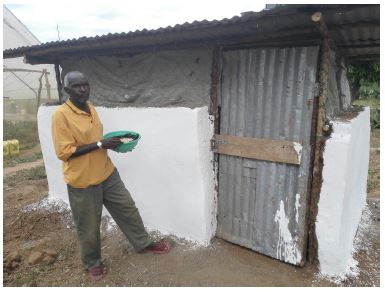
FRONT VIEW OF THE CONSTRUCTED POULTRY STRUCTURE AT KIBWEZI RESOURCE CENTER
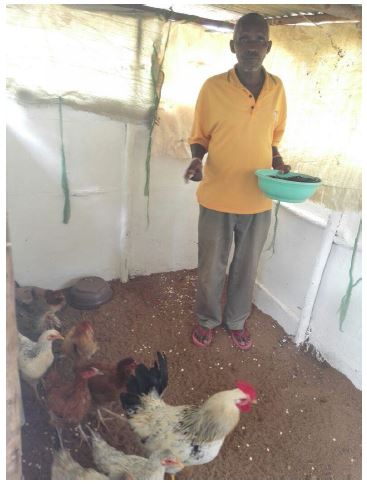
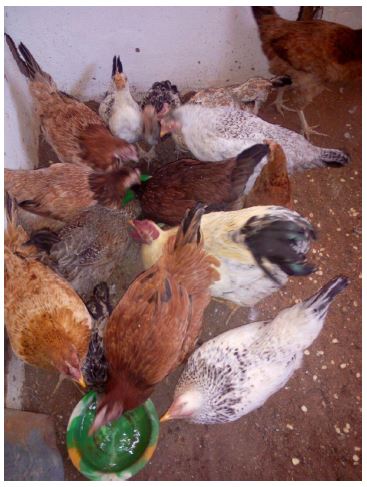
MR. KILUTA, THE CARE TAKER, FEEDING THE CHICKENS
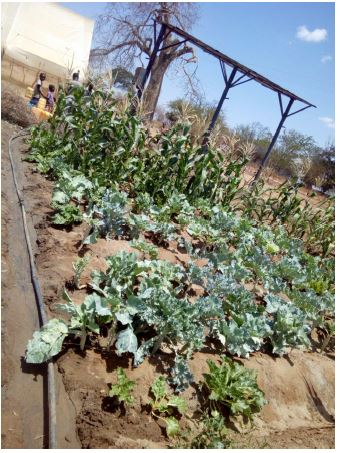
THE WATER TANK DONATED BY IRFF GERMANY NOW ASSISTS THE CENTER TO SUSTAIN A
VEGETABLE GARDEN AND RETAINS WATER FOR THE POULTRY PROJECT.
STATUS OF THE PROJECT:
The poultry project has been a success. We have new generation of chickens and production of eggs
that the center now sells and obtains extra funds to buy the chicken feeds. It is now self sustaining.
TISSUE CULTURED BANANAS
Tissue cultured bananas are a modern agricultural innovation developed to improve banana production through the use of plant biotechnology. This method involves the propagation of banana plants from small pieces of disease-free plant tissue grown under sterile laboratory conditions, resulting in uniform, healthy, and high-yielding seedlings. Tissue culture technology addresses major challenges in traditional banana farming, such as the spread of pests and diseases, low productivity, and inconsistent plant quality. By providing farmers with clean planting materials that establish quickly and mature uniformly, tissue cultured bananas contribute significantly to increased yields, improved food security, and sustainable agricultural development.
A guide was made to assist farmers on planting Tissue Cultured Bananas…
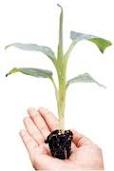
TISSUE CULTURED BANANAS
What is Tissue Culture?
The propagation of a plant by using a plant part or single cell or group cell in a test tube under very controlled and hygienic conditions is called “Tissue Culture”.
Agro Climate
Banana is basically a tropical crop, grows well in temperature range of 13ºC – 38ºC with RH regime of 75-85%.Chilling injury occurs at temperatures below 12ºC. The normal growth of the banana begins at 18ºC, reaches optimum at 27ºC, then declines and comes to a halt at 38ºC.
Soil
Soil for banana should have good drainage, adequate fertility and moisture. Deep, rich loamy soil with pH between 6-7.5 are most preferred for banana cultivation. Ill drained, poorly aerated and nutritionally deficient soils are not suitable for banana. Avoid soil of low laying areas, very sandy & heavy black cotton with ill drainage. Soil that is not too acidic & not too alkaline, rich in organic material with high nitrogen content, adequate phosphorus level and plenty of potash are good for banana.
Varieties
Bananas are grown under diverse conditions and production systems. Selection of varieties therefore is based on a large number of varieties catering to various kinds of needs and situations. This project specializes with three varieties, namely:-
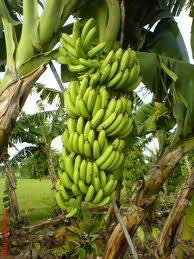
- Grandnaine
- Giant Cavendish, and
- Williams hybrid
Grandnaine is gaining popularity and may soon be the most preferred variety due to its tolerance to biotic stresses and good quality bunches. Bunches have well spaced hands with straight orientation of figures, bigger in size. Fruit develops attractive uniform yellow colour with better self life & quality than other cultivars.
Advantages of Tissue Culture Planting Material
- True to the type of mother plant under well management.
- Pest and disease free seedlings.
- Uniform growth, increases yield.
- Early maturity of crop
- Round the year planting possible as seedlings are made available throughout the year.
- Two successive rations are possible in a short duration which minimizes cost of cultivation.
- No staggered harvesting.
- 95% – 98% plants bear bunches.
- New varieties can be introduced and multiplied in a short duration.
Planting Time
Planting of tissue culture Banana can be done throughout the year except when the temperature is too low or too high.
How to plant banana seedlings
- Spacing 2.5 * 2.5 or 3m by 3m
- Depth of the hole 3 * 3ft
- Put top soil aside when digging the hole
- Mix top soil and manure as follows-
- 1 – 2 debes of manure per hole
- About 200g of a compound fertilizer (N.P.K) for farmers in Western Kenya and 100g DAP for other parts of the country.
- 30g of mocap.
- Return the mixture to the hole filling about 2ft.
- Cut the polythene sleeves carefully so that the seedlings can be planted with the entire ball of the soil.
- Place the seedlings at the centre of the planting hole.
- Cover the seedling at exactly the same depth as it was in the polythene sleeve leaving it about 6 inches below the soil surface.
- Top dress with 100g of C.A.N fertilizer or urea every month beginning 3 months after planting.
- The C.A.N or urea should be applied in a band 2ft away from the plant and covered with the soil.
- The seedlings should not be allowed to dry.
Water Management
Banana is a water loving plant, requires a large quantity of water for maximum productivity. But Banana roots are poor withdrawal of water. Water requirement of banana has been worked out to be 2000mm per Annum.
Apply sufficient water and maintain field capacity. Excess irrigation will lead to root zone congestion due to removal of air from soil pores, thereby affecting plant establishment and growth.
 English